
Loading…
Loading…
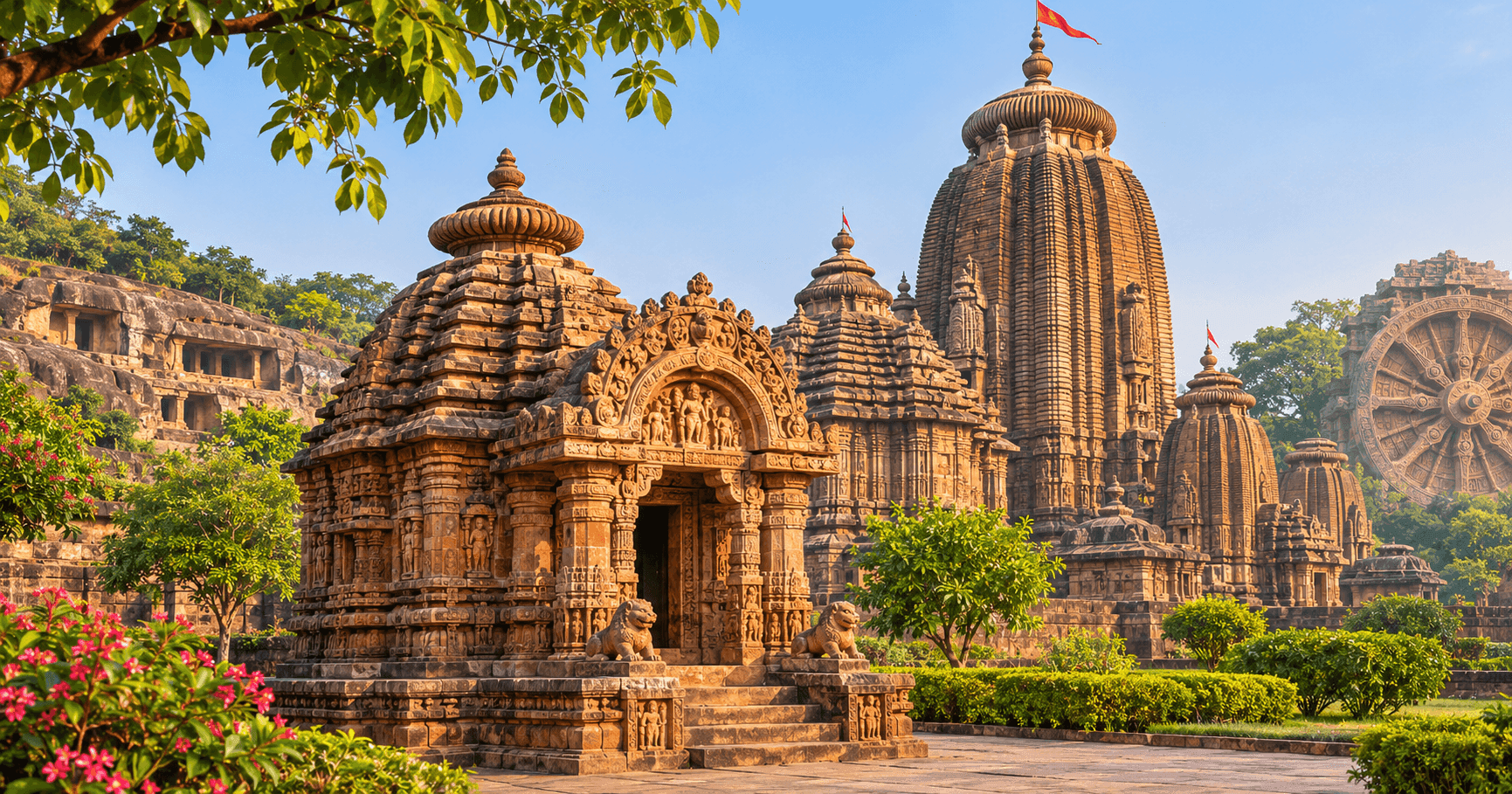
Plan a Bhubaneswar year-end trip in 2026 with Lingaraj Temple, Mukteswara Temple, Udayagiri Caves and Konark Sun Temple. Discover a three-day itinerary, local culture and hotels in Bhubaneswar with Sarovar Hotels.
Some cities tell their stories through museums. Bhubaneswar tells them through magnificent stone temples, intricately carved sculptures and ancient monuments that have stood for centuries. Wander through its historic Old Town, and you'll discover towering temple spires, sacred waterbodies and architectural details that reveal the city's remarkable past.
Known as the Temple City of India, Bhubaneswar is a fascinating destination for travellers who enjoy history, spirituality and cultural exploration. And with relatively pleasant weather in December, the final days of 2026 offer a lovely opportunity to discover its heritage without the intense summer heat.
From the famous Lingaraj Temple to the ancient Udayagiri and Khandagiri Caves, there's plenty to explore. You can even extend your Bhubaneswar trip with an excursion to the magnificent Konark Sun Temple, a UNESCO World Heritage Site.
Whether you're travelling with family, planning a cultural getaway or hoping to end the year somewhere meaningful, this guide covers the famous temples in Bhubaneswar, heritage attractions, a Konark day trip, a practical three-day itinerary and places to stay.
Best time to visit: October to March generally offers comfortable conditions for sightseeing, with December being suitable for outdoor exploration.
Famous temples: Lingaraj Temple, Mukteswara Temple, Rajarani Temple and Parasurameswara Temple showcase Odisha's architectural heritage.
Historical attractions: Udayagiri and Khandagiri Caves, Dhauli Shanti Stupa and Odisha's museums offer experiences beyond temple sightseeing.
Konark excursion: The UNESCO-listed Sun Temple is approximately 65 km from Bhubaneswar and can be explored on a day trip.
Ideal duration: Two days are suitable for major city attractions, while three days allow time for a Konark excursion.
There's a reason Bhubaneswar is called the Temple City. The historic Ekamra Kshetra, or Old Town, is home to an extraordinary collection of temples that reflect centuries of religious devotion and artistic craftsmanship.
What makes these monuments particularly interesting is the evolution of Kalinga architecture. As you explore different temples, you'll notice how their towers, entrance halls, sculptures and decorative details changed over time.
But Bhubaneswar's history extends far beyond its temples. The ancient Jain caves at Udayagiri and Khandagiri take you back to the period of King Kharavela, while Dhauli is associated with the Kalinga War and Emperor Ashoka's transformation towards the ideals of peace and non-violence.
Winter makes discovering these places more comfortable. You can spend mornings exploring temple courtyards, afternoons visiting museums and evenings enjoying regional Odia cuisine.
For a year-end holiday that combines heritage, learning and spiritual experiences, Bhubaneswar offers something genuinely different.
The city's temples are more than religious landmarks. They are remarkable examples of stone craftsmanship, architectural innovation and traditions that continue to shape Odisha's cultural identity.
Here are five temples worth including in your Bhubaneswar sightseeing itinerary.
Standing prominently in Bhubaneswar's Old Town, Lingaraj Temple is one of the city's most important religious landmarks.
Dedicated to Lord Shiva, worshipped here as Harihara, the temple is an outstanding example of Kalinga architecture. Its towering main shrine, intricately carved stone structures and surrounding smaller temples reflect the architectural achievements of medieval Odisha.
Unlike monuments visited only for their historical value, Lingaraj remains an active place of worship, with daily rituals and religious traditions.
Even from outside the complex, the magnificent temple tower offers a glimpse into the craftsmanship that has made Bhubaneswar famous.
Why visit: Spiritual significance, traditional Kalinga architecture and centuries-old temple heritage.
Travel tip: Entry to the main temple complex is restricted to Hindus. Non-Hindu visitors can view its architecture from a designated platform outside. Photography and other visitor restrictions must be respected.
Not all architectural wonders need to be enormous. Sometimes, the beauty lies in the smallest details.
Mukteswara Temple, dedicated to Lord Shiva, is known for its beautifully proportioned structure and exquisite stone carvings. Dating to around the 10th century, the temple is widely admired for its contribution to the development of Odisha's architectural style.
Its most recognisable feature is the elegant arched gateway, known as a torana, decorated with intricate floral designs, mythical figures and ornamental patterns.
The sculpted walls and beautifully designed entrance make it a fascinating stop for anyone interested in art, history or photography.
Why visit: Intricate carvings, a distinctive ornamental gateway and early Kalinga architecture.
Travel tip: Combine Mukteswara Temple with nearby Parasurameswara Temple and Rajarani Temple to explore different architectural periods without travelling far.
If you enjoy exploring historical architecture at your own pace, Rajarani Temple deserves a place on your itinerary.
Built around the 11th century, the temple is particularly admired for its beautifully sculpted exterior and harmonious architectural proportions.
Its walls feature elaborate carvings of human figures, divine beings and decorative motifs, revealing the artistic sophistication of the period.
Unlike Bhubaneswar's active places of worship, Rajarani Temple is primarily visited as a protected heritage monument, allowing travellers to focus on its architectural details.
The landscaped surroundings also make it a pleasant place for a leisurely visit.
Why visit: Historical architecture, stone sculptures and heritage photography.
Travel tip: Rajarani Temple is an Archaeological Survey of India-protected monument, and entry tickets are applicable. Check current visiting hours and ticket arrangements before travelling.
One of the oldest surviving temples in Bhubaneswar, Parasurameswara Temple offers an interesting contrast to the city's later, larger shrines.
Dedicated to Lord Shiva, the temple dates to around the 7th century and represents an early phase of Odisha's stone temple architecture.
Its carvings include religious figures, decorative motifs and sculptural elements associated with the period.
For history enthusiasts, the temple provides an opportunity to understand how the architectural style seen at Mukteswara and Lingaraj developed over the centuries.
Why visit: Early temple architecture, historical carvings and Odisha's religious heritage.
Travel tip: Since Parasurameswara and Mukteswara temples are close to each other, explore them together and compare their architectural details.
While many of Bhubaneswar's ancient temples are dedicated to Lord Shiva, Ananta Vasudeva Temple offers a different religious connection.
Situated near Bindu Sagar Lake, this historic temple is dedicated to Lord Krishna, worshipped along with Balarama and Subhadra.
The shrine is an important part of the city's Vaishnava heritage and continues to attract devotees.
Nearby Bindu Sagar, a sacred waterbody associated with Old Town's religious traditions, adds another dimension to the experience. The surrounding temples and historic streets make this area particularly interesting for a heritage walk.
Why visit: Vaishnava traditions, historic temple architecture and the sacred landscape of Old Town.
Travel tip: Explore the permitted areas around Bindu Sagar and follow local temple guidelines. Avoid entering the water or walking along unsafe sections of the banks.
Once you've explored the city's famous shrines, there's another side of Bhubaneswar waiting to be discovered.
These historical and cultural attractions reveal the region's connections with Jainism, Buddhism, ancient Kalinga and Odisha's artistic traditions.
Imagine walking through rock-cut chambers carved into hills more than two thousand years ago. That's the experience awaiting visitors at Udayagiri and Khandagiri.
These neighbouring hills contain ancient caves associated with Jain monks and the reign of King Kharavela, dating back to around the 2nd century BCE.
The caves were used as monastic retreats and feature carvings, inscriptions and architectural details that provide insights into life in ancient Kalinga.
Among the most notable attractions are Rani Gumpha, known for its elaborate sculptural panels, and Hathigumpha, associated with an important historical inscription.
The hilltop setting also offers views of the surrounding city.
Why visit: Jain heritage, ancient inscriptions, rock-cut architecture and historical exploration.
Travel tip: Allow two to three hours and wear comfortable footwear. The caves involve steps and uneven stone paths, which may be challenging for visitors with limited mobility.
For travellers interested in Indian history, Dhauli is one of the most meaningful Bhubaneswar tourist places.
Located on a hill overlooking the Daya River, Dhauli is traditionally associated with the Kalinga War fought during Emperor Ashoka's reign in the 3rd century BCE.
The war's devastating consequences are closely linked with Ashoka's subsequent embrace of Buddhist teachings and the principles of non-violence.
Today, the white Dhauli Shanti Stupa, also known as the Peace Pagoda, commemorates this transformation.
Visitors can explore the stupa, admire the hilltop views and learn about the nearby Ashokan rock edicts, which provide an important historical connection to the emperor's rule.
Why visit: Ancient Indian history, Buddhist heritage and the message of peace.
Travel tip: Set aside time for both the Shanti Stupa and the rock edicts. A light-and-sound show may also be available, subject to current operating arrangements.
Want to discover the artistry behind Odisha's famous textiles, sculptures and handicrafts?
Head to Kala Bhoomi, the Odisha Crafts Museum, where visitors can explore the state's creative traditions through curated exhibits.
The museum showcases different forms of craftsmanship, including stone and wood carving, metalwork, terracotta, handloom textiles and traditional weaving.
You can learn about the materials, techniques and cultural significance behind these artistic traditions.
Depending on the schedule, demonstrations and workshops may also be available.
It's a particularly worthwhile stop for travellers who enjoy art, design and learning about regional culture beyond historical monuments.
Why visit: Traditional crafts, Odia textiles, artisan heritage and cultural learning.
Travel tip: The museum is generally open from 10 AM to 5:30 PM and closed on Mondays. Confirm workshop schedules if you're interested in a hands-on experience.
If you're interested in understanding how Odisha's artistic and cultural traditions developed, consider visiting the Odisha State Museum.
The museum houses collections associated with archaeology, ancient manuscripts, art, sculpture and regional history.
Its exhibits offer additional context for the monuments you'll encounter during your Bhubaneswar trip.
For instance, after seeing the city's historic temples, you can explore museum collections that provide insights into Odisha's religious imagery, craftsmanship and cultural development.
Why visit: Historical artefacts, manuscripts, sculptures and Odisha's cultural heritage.
Travel tip: The museum is generally closed on Mondays and state public holidays. Allow around two hours if you want to explore several galleries.
If you have an extra day in Bhubaneswar, don't miss the opportunity to visit Konark Sun Temple.
Located approximately 65 km from Bhubaneswar, this UNESCO World Heritage Site is one of India's most remarkable examples of ancient temple architecture.
Built during the 13th century under King Narasimhadeva I of the Eastern Ganga dynasty, the temple was designed as a monumental stone chariot dedicated to Surya, the Sun God.
Its most striking features include 24 intricately carved wheels, sculpted horses and elaborate reliefs depicting musicians, dancers, deities and scenes from everyday life.
Although parts of the original structure have been lost, the surviving monument continues to demonstrate the extraordinary craftsmanship of medieval Odisha.
The Bhubaneswar to Konark Sun Temple journey is suitable for a day trip by road.
Distance: Approximately 65–70 km, depending on your starting point and chosen route.
Travel time: Allow roughly two hours each way, with additional time during busy holiday periods.
Transport: A private cab or pre-booked vehicle is convenient for travellers who want to combine Konark with nearby attractions.
Time at the temple: Set aside approximately two to three hours to explore the monument and understand its architecture.
If time permits, consider including one of these stops:
Pipili: Known for its colourful appliqué work, including decorative textiles, umbrellas, wall hangings and handicrafts. It's an interesting place to discover another part of Odisha's artistic heritage.
Chandrabhaga Beach: Located near Konark, this stretch of coastline offers scenic views of the Bay of Bengal and an opportunity to relax after exploring the temple.
Planning tip: Start early from Bhubaneswar, visit the Sun Temple and choose one additional stop. Trying to include Konark, Puri and several attractions in a single day may make the excursion unnecessarily rushed.
Note: Konark Sun Temple is a protected historical monument rather than an active shrine for regular darshan. Entry tickets apply, and visitors should follow the conservation and access rules at the site.
A heritage trip becomes more memorable when you take time to experience the city's traditions beyond its famous landmarks.
One of the most enjoyable ways to explore Bhubaneswar is on foot.
The Old Town, also known as Ekamra Kshetra, has clusters of historic temples, traditional streets and sacred waterbodies that reveal how the city's religious and everyday life have developed together.
Instead of moving between temples entirely by car, consider exploring a short heritage route around Mukteswara Temple, Parasurameswara Temple and nearby shrines.
Odisha Tourism also offers curated heritage walking experiences. Check availability and booking arrangements if you'd prefer a guided tour.
Between your temple visits and sightseeing excursions, make time to explore Odisha's local cuisine.
Some dishes worth trying include:
Dalma: A comforting dish prepared with lentils, vegetables and traditional spices.
Pakhala Bhata: Fermented or water-soaked rice, commonly enjoyed with regional accompaniments.
Dahi Bara Aloo Dum: Soft lentil dumplings served with yoghurt and spiced potato curry, a popular street-food combination.
Chhena Poda: A baked cottage cheese dessert with a caramelised exterior.
Look for established restaurants offering Odia thalis or regional specialities. A traditional meal adds another cultural experience to your trip.
Odisha's artistic traditions extend from temple carvings to handwoven textiles and colourful decorative crafts.
While shopping in Bhubaneswar, look for Pattachitra paintings, Sambalpuri textiles, stone carvings and appliqué products.
You can explore government-supported handicraft outlets and established craft shops to learn more about the products and their origins.
If you're especially interested in traditional artwork, Kala Bhoomi offers a useful introduction before you begin shopping.
Wondering how to explore Bhubaneswar's temples, caves and nearby attractions without rushing through the entire holiday?
This three-day itinerary combines spiritual sightseeing, historical exploration and a day trip to Konark.
Morning: Begin at Lingaraj Temple
Start the day with a visit to the Lingaraj Temple area. Explore according to the temple's entry rules and admire its impressive architecture.
Continue towards Ananta Vasudeva Temple and Bindu Sagar to discover more of Old Town's religious heritage.
Afternoon: Discover Mukteswara and Parasurameswara Temples
After lunch, visit Mukteswara Temple and nearby Parasurameswara Temple.
Take time to admire the carved gateways, sculptures and contrasting architectural styles.
Late Afternoon: Visit Rajarani Temple
Finish your temple trail at Rajarani Temple, where you can explore the protected monument and its landscaped surroundings.
Evening: Enjoy a Traditional Odia Meal
Return to your accommodation and spend the evening relaxing over regional cuisine.
Morning: Explore Udayagiri and Khandagiri Caves
Begin with a visit to the ancient Jain caves. Discover their inscriptions, sculptures and historical significance.
Afternoon: Visit Kala Bhoomi
After lunch, head to Kala Bhoomi to explore Odisha's traditional crafts and textiles.
If you're especially interested in manuscripts and archaeology, you can choose Odisha State Museum instead.
Late Afternoon: Explore Dhauli Shanti Stupa
Continue towards Dhauli to visit the Peace Pagoda and learn about Ashoka's connection with the region.
Return to your hotel in the evening for dinner and rest.
Morning: Leave for Konark
Start early from Bhubaneswar and travel towards Konark.
Explore the Sun Temple, its elaborate carvings and monumental stone-chariot design.
Afternoon: Enjoy a Scenic or Cultural Stop
After lunch, visit Chandrabhaga Beach or explore the appliqué craft shops at Pipili, depending on your route and interests.
Evening: Return to Bhubaneswar
Head back to the city and enjoy a relaxed final evening before departure.
Only have two days to visit? Dedicate the first day to Bhubaneswar's temples and the second to Konark, or stay within Bhubaneswar if you'd prefer to explore its caves, museums and other heritage attractions more thoroughly.
The best time to visit Bhubaneswar is generally between October and March, when the weather is more comfortable for sightseeing than during the hot summer months.
December is particularly suitable for exploring temples and outdoor monuments, although afternoons can still feel warm.
Period | What to Expect | Suitable Experiences |
|---|---|---|
October–November | Post-monsoon conditions with gradually more comfortable weather | Temple visits, museums and cultural sightseeing |
December–January | Relatively pleasant days and cooler mornings and evenings | Heritage walks, Konark excursions and outdoor monuments |
February–March | Increasing daytime temperatures as summer approaches | Early sightseeing, museum visits and cultural attractions |
For a year-end holiday in 2026, plan your sightseeing earlier in the day and allow time for breaks between outdoor attractions.
If your trip includes 31 December 2026 or 1 January 2027, check whether museums, guided walks or other attractions have special holiday arrangements. Specific year-end events should only be included in your plans after they have been officially confirmed.
A few practical arrangements can make your heritage holiday more enjoyable.
Plan temple visits carefully: Religious sites and protected monuments have different access rules, opening hours and photography restrictions.
Wear comfortable footwear: Temple trails, archaeological sites and cave complexes may involve considerable walking.
Respect religious traditions: Dress appropriately, remove footwear when required and follow the instructions displayed at places of worship.
Book transport for Konark: A pre-arranged cab can make the day trip more convenient, particularly if you're travelling with family.
Check museum closures: Kala Bhoomi and Odisha State Museum are generally closed on Mondays.
Allow time for sightseeing: Don't try to cover every temple in one day. Choose attractions based on your interests and proximity.
Book accommodation in advance: The Christmas and New Year period may bring increased demand for hotel rooms.
Carry essentials: Keep water, sun protection, a light layer for cooler evenings and necessary medication with you.
When you're planning temple visits, historical excursions and a day trip to Konark, choosing accommodation with convenient road access and on-site dining can make your holiday more comfortable.
Among the hotels in Bhubaneswar, Prachi Sarovar Premiere, Bhubaneswar is an option for travellers who want to stay close to the city's Khandagiri heritage area.
Located on NH-16, the hotel offers access to major road connections and is approximately 1 km from the Udayagiri and Khandagiri Caves.
Here's what the property offers:
Convenient Location: Situated near Udayagiri and Khandagiri Caves, with road connectivity for exploring Bhubaneswar's temples and planning longer excursions.
Comfortable Accommodation: Choose from well-appointed rooms and suites, including categories with views of the Khandagiri Hills and Temple.
On-Site Dining: Enjoy regional and international dishes at Flavours, the hotel's all-day dining restaurant.
Relaxed Evenings: Mahua Bar & Lounge provides a setting for unwinding after a day of exploring.
Guest Convenience: The property offers Wi-Fi, 24-hour in-room dining and assistance with local travel arrangements.
For travellers specifically looking for Sarovar Portico Bhubaneswar, the property in Kharvela Nagar is currently listed as Opening Soon under the Sarovar Portico brand and operating as The Hotel Prachi. Its opening status for the year-end holiday period should be confirmed directly before making a booking.
Discover the ancient temples, historic caves and rich cultural heritage of Bhubaneswar with a comfortable stay at Prachi Sarovar Premiere, Bhubaneswar, part of Sarovar Hotels.
Whether you're planning a family getaway, a spiritual journey or a heritage-focused holiday, enjoy well-appointed accommodation, convenient dining facilities and road access to attractions such as Lingaraj Temple, Udayagiri and Khandagiri Caves, and Konark Sun Temple.
For room availability, family stays, group reservations and December holiday enquiries, contact the hotel directly.
Address
Plot No. 1–5, NH-16, Khandagiri, Bhubaneswar, Odisha – 751030
Reservations: +91 96689 02004
Hotel Phone: +91 96689 02002
Reservations Email: reservations@prachisarovarbbsr.com
Hotel Email: spbbs@sarovarhotels.com
Contact information verified against the official Sarovar Hotels property website.
Sarovar Portico, Bhubaneswar (Opening Soon)
Location: 6, Unit-3, Janpath, Kharvela Nagar, Bhubaneswar – 751001
Phone: +91 674 238 0850