
Loading…
Loading…
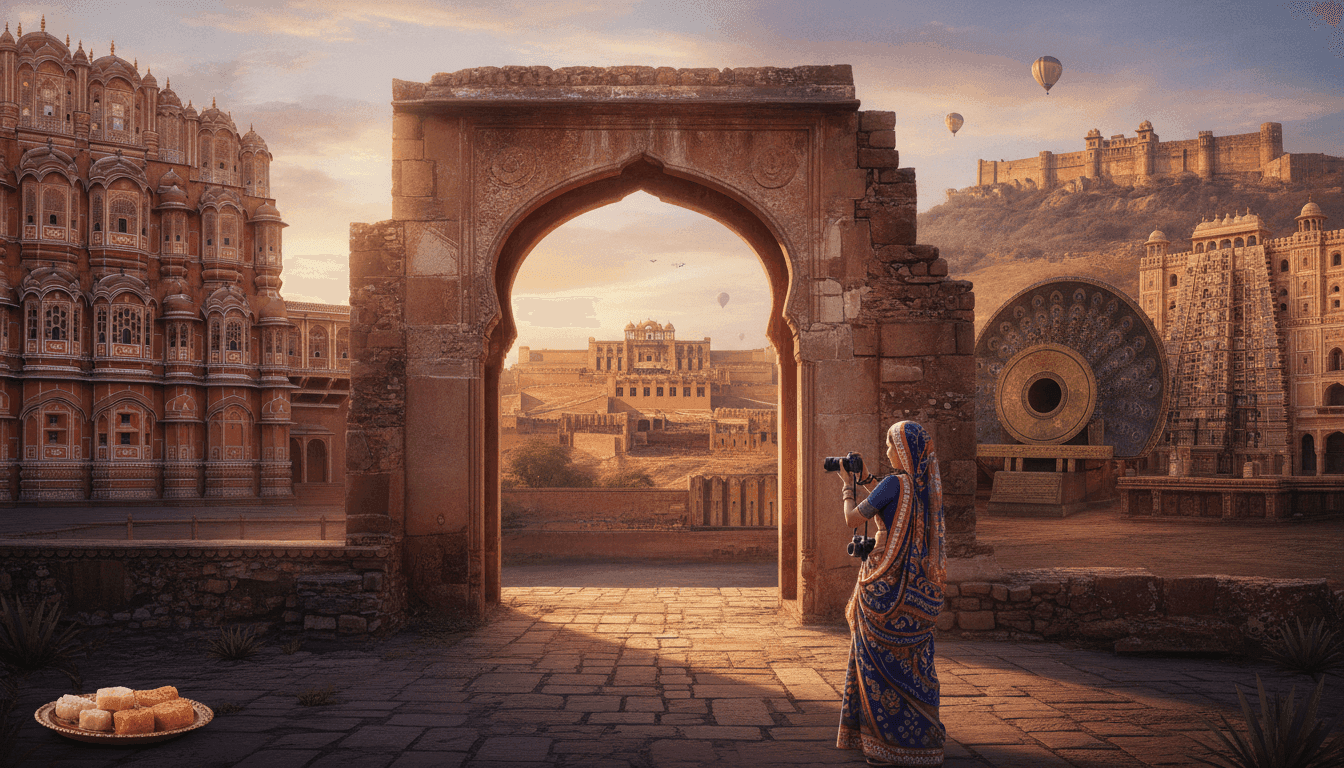
Plan a two-day Jaipur trip with the city's top tourist attractions, including Amer Fort, Hawa Mahal, City Palace, Jantar Mantar and Nahargarh Fort, plus photography tips, local food and practical sightseeing advice.
Jaipur, popularly known as the Pink City, is a destination where royal history, colourful architecture, traditional markets and local culture come together. From magnificent forts and palaces to historic observatories and vibrant streets, the city offers plenty for travellers interested in heritage and photography.
For visitors planning a short trip, Jaipur's major attractions can be explored with a well-organised itinerary. A two-day visit can cover several important landmarks while still leaving time to experience local food, markets and the city's unique atmosphere.
Choosing the right accommodation is also an important part of planning your trip. Travellers comparing the best hotels in Jaipur should consider location, access to major attractions, dining options and the facilities available at the property.
Jaipur's history can be seen throughout the city. Its forts, palaces, temples, markets and planned streets reflect the architectural and cultural heritage of Rajasthan.
The city is also an excellent destination for photography. Pink sandstone buildings, decorated gateways, palace courtyards, colourful textiles and panoramic views provide a wide range of subjects for photographers.
For first-time visitors, combining major monuments with local food and market experiences can provide a more complete introduction to Jaipur.
Begin your first day with Amer Fort, one of Jaipur's most important historical landmarks. Located on a hill overlooking Maota Lake, the fort is known for its impressive courtyards, palaces, gateways and detailed decorative work.
The combination of Rajput and Mughal architectural influences makes Amer Fort particularly interesting for history and architecture enthusiasts. Photography lovers can capture both the intricate interiors and expansive views from the fort.
Starting early can make the visit more comfortable and give you enough time to explore the complex without rushing.
After visiting Amer Fort, continue towards Jal Mahal, one of Jaipur's most recognisable landmarks. The palace stands in the middle of Man Sagar Lake and creates a striking visual contrast against the surrounding landscape.
The lakeside viewpoint is particularly popular among photographers. The reflection of the palace in the water and the surrounding Aravalli landscape create excellent opportunities for wide and detailed photographs.
Continue towards Jaipur's old city and explore City Palace, a historic complex associated with Jaipur's royal heritage.
The complex features courtyards, gateways, museums and beautifully decorated architectural spaces. Visitors can also explore collections related to royal clothing, textiles, weapons and other historical objects.
For photography enthusiasts, the decorated entrances and colourful architectural details offer plenty of opportunities to experiment with composition.
Located close to City Palace, Jantar Mantar offers a very different experience. The UNESCO World Heritage Site contains large astronomical instruments that were designed to observe and measure celestial movements.
The geometric structures provide interesting photographic subjects while also offering an insight into the scientific knowledge of the period.
Take some time to understand the purpose of the instruments rather than simply viewing them as architectural structures.
Finish your first day around Hawa Mahal, one of Jaipur's most iconic landmarks.
The five-storey pink sandstone structure is recognised for its numerous windows and jharokhas. The façade is particularly photogenic and has become one of the defining visual symbols of Jaipur.
Instead of photographing only the front façade, explore the surrounding streets and viewpoints to capture the monument within its old-city setting.
Start your second day with Nahargarh Fort, located on the Aravalli hills overlooking Jaipur.
The fort provides panoramic views of the city, making it particularly attractive for photographers interested in landscapes and cityscapes. The historic architecture within the fort also provides opportunities for detailed photographs.
Try visiting earlier in the day when the weather is more comfortable for exploring the outdoor areas.
Next, visit Albert Hall Museum, located in Ram Niwas Garden. The building itself is an example of Indo-Saracenic architecture and is an interesting subject for photography.
Inside, visitors can explore collections featuring textiles, sculptures, metal objects, weapons, miniature paintings and other historical items.
It is a useful stop for travellers who want to understand Jaipur beyond its forts and palaces.
No cultural visit to Jaipur is complete without spending some time in its traditional markets.
The old-city markets offer textiles, jewellery, handicrafts, pottery and other locally made products. They also provide an opportunity to experience the everyday energy of Jaipur.
For photographers, markets offer colourful compositions, textures and glimpses of local life. Always be respectful when photographing people and ask permission when appropriate.
Food is an important part of understanding Rajasthan's culture. During your two-day trip, make time to try traditional Rajasthani dishes as well as popular local snacks.
Dishes such as dal baati churma and gatte ki sabzi can provide an introduction to the region's traditional cuisine. Jaipur also has a wide selection of cafés and contemporary restaurants.
If you are staying at a hotel, checking its dining facilities can be useful, particularly after a long day of sightseeing.
For a short Jaipur trip, your hotel can serve as a convenient base between sightseeing stops. A practical location can help reduce unnecessary travel and give you more time to explore.
If you are planning your stay at Hotel Paradise Jaipur, the property can be considered as a base for exploring different parts of the city. Before booking, check the current facilities, room availability and travel times to the attractions included in your itinerary.
When comparing the best hotels in Jaipur, look at more than just the room. Consider location, dining, facilities, transportation and how easily the property fits into your sightseeing route.
Travellers looking for comfortable accommodation while exploring the Pink City can also consider Sarovar Hotels. Sarovar has multiple properties in Jaipur, giving visitors different accommodation options depending on their preferred location and travel plans.
Choosing a hotel that fits your itinerary can make a noticeable difference during a short trip. If you plan to visit attractions spread across different parts of Jaipur, consider the hotel's location and transportation options before booking.
The right accommodation can provide a comfortable place to relax between visits to forts, museums, markets and other Jaipur attractions.
Hawa Mahal is one of the most recognisable photography locations in Jaipur. Its repetitive windows, pink sandstone façade and architectural details create numerous opportunities for creative compositions.
Try different angles and include elements of the surrounding streets to give your photographs more context.
Amer Fort combines grand courtyards with intricate details, decorative gateways and views over the surrounding landscape.
The combination of architecture and natural surroundings makes it particularly useful for photographers who want variety within one location.
Jal Mahal offers a simpler but highly recognisable composition. The palace, water and surrounding landscape create a strong visual combination, particularly when photographed from the lakeside viewpoint.
City Palace is ideal for photographers interested in royal architecture. Its courtyards, decorated doors, colourful details and historical collections offer many different subjects.
If panoramic views are your priority, Nahargarh Fort is one of the strongest options. Its elevated position provides a broad view across Jaipur and the surrounding landscape.
A two-day Jaipur itinerary works best when attractions are grouped according to their location. This reduces travel time and allows you to spend more time actually exploring each place.
Start your sightseeing early, especially when visiting outdoor attractions. Keep some flexibility in your schedule so you can spend additional time at locations that interest you.
Photography lovers should also avoid rushing from one monument to another. Allowing extra time at each location can help you notice architectural details, local activity and changing light conditions.
Wear comfortable footwear because several attractions involve walking, stairs or uneven surfaces.
Carry drinking water and protect yourself from the sun when visiting outdoor forts and viewpoints. Weather conditions can vary considerably depending on the season, so plan your clothing and sightseeing hours accordingly.
Keep your phone or camera charged and carry a power bank if you plan to photograph throughout the day.
Before visiting major attractions, check current opening hours, ticket information and visitor guidelines because these details may change.
The best hotels in Jaipur are not necessarily the ones closest to a single attraction. Instead, consider how the property fits into your complete itinerary.
If your plans focus on the old city, City Palace, Hawa Mahal and Jantar Mantar, convenient access to central Jaipur may be useful. If your itinerary includes Amer Fort and Nahargarh Fort, consider travel time towards the northern and eastern parts of the city.
A comfortable hotel with suitable dining and leisure facilities can also make a difference after a full day of sightseeing.
For the first day, focus on Jaipur's major royal attractions such as Amer Fort, Jal Mahal, City Palace, Jantar Mantar and Hawa Mahal.
Use the second day for Nahargarh Fort, Albert Hall Museum, local markets and food experiences. This gives you a balance of architecture, history, photography and local culture.
If you have more than two days, consider slowing down your itinerary rather than simply adding more attractions. This gives you more time to explore Jaipur's neighbourhoods and discover experiences beyond the main tourist circuit.
Jaipur is a destination where history, architecture, culture and photography naturally come together. From the grandeur of Amer Fort and City Palace to the distinctive façade of Hawa Mahal and the panoramic views from Nahargarh Fort, the city offers a wide range of experiences for travellers.
A carefully planned two-day itinerary can help you experience the major Jaipur tourist attractions while still leaving time for local food, markets and photography. Choosing comfortable accommodation and grouping nearby attractions together can make the journey easier and more enjoyable.
Whether you are visiting Jaipur for its royal heritage, colourful streets, traditional crafts or photography opportunities, the Pink City offers something memorable around almost every corner.
If Jaipur is part of a larger Rajasthan holiday, explore more travel destinations and discover other memorable places, experiences and stays for your next getaway.
Make your Jaipur trip more comfortable with a stay that fits your sightseeing plans and gives you a relaxing place to return to after exploring the city.
For reservations and enquiries with Sarovar Hotels:
📞 Call: +91 98 8680 0049
📧 Email: Bookings@sarovarhotels.com
Plan your Jaipur getaway today and experience the Pink City's history, culture and unforgettable attractions.