
Loading…
Loading…
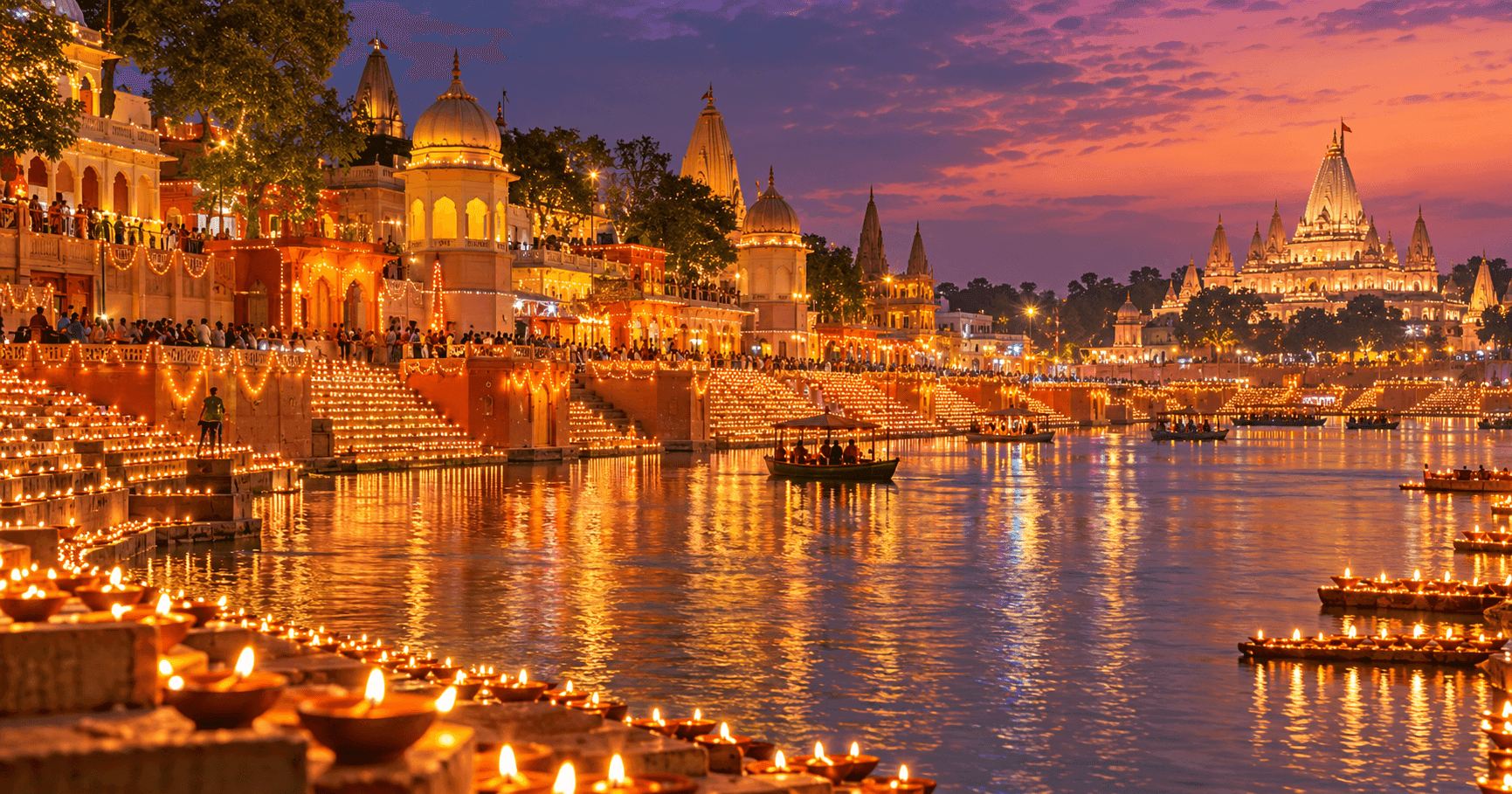
Plan Ayodhya Deepotsav 2026 with festival dates, Ram Ki Paidi lighting, Ram Mandir darshan, a three-day itinerary and travel tips. Explore hotels in Ayodhya and enjoy a comfortable festive stay with Sarovar Hotels.
Every year, just before Diwali, the ancient city of Ayodhya turns into a river of light. Lakhs of earthen diyas glow along the steps of Ram Ki Paidi, the Saryu reflects every flame, and the sky fills with laser projections, drone formations and the sound of bhajans. This is Ayodhya Deepotsav, the state-organised festival of lights that celebrates the return of Lord Ram to Ayodhya after fourteen years of exile and the victory over Ravana.
Deepotsav 2026 is set to be one of the biggest editions yet. It is the tenth Deepotsav, it falls in the third Diwali season since the consecration of Ram Lalla at the new Ram Mandir, and the target for diyas is higher than ever before. If you are planning to travel from Delhi, Lucknow or anywhere else in India to witness it, this guide covers everything you need: Deepotsav 2026 dates, what happens at Ram Ki Paidi, how to plan Ram Mandir darshan during the festival rush, the best places to visit in Ayodhya, how to reach, what to eat, and where to stay in Ayodhya for a comfortable, well-planned trip with Sarovar Hotels.
Detail | Information |
|---|---|
Festival | Ayodhya Deepotsav 2026 (10th edition) |
Reported dates | 5 to 7 November 2026 |
Main lamp-lighting evening | 7 November 2026 (the day before Diwali) |
Diwali 2026 | Sunday, 8 November 2026 |
Main venue | Ram Ki Paidi and the Saryu riverfront ghats |
Diya target | Around 33 lakh earthen lamps (planned) |
Other highlights | Cultural stage at Ram Ki Paidi, Ram Leela, laser and projection shows, drone show, Saryu Aarti |
Sarovar stay in Ayodhya | Park Inn by Radisson Ayodhya, Civil Lines area |
A quick note on dates: Deepotsav is organised by the Uttar Pradesh government and the Ayodhya district administration, and the final programme, timings and entry arrangements are announced by them. Reports in October 2026 put the 10th Deepotsav from 5 to 7 November, with the main diya lighting on the evening of 7 November. Always check the official announcement a few days before you travel, especially if you are planning around a specific evening.
Deepotsav literally means "festival of lamps". In Ayodhya, it is a grand public celebration of Diwali held on the banks of the Saryu, close to the birthplace of Lord Ram. According to the Ramayana, when Shri Ram returned to Ayodhya with Sita and Lakshman after defeating Ravana, the people of the city lit rows of lamps to welcome him home. Deepotsav recreates that welcome on a scale that has to be seen to be believed.
The modern Deepotsav was started by the Uttar Pradesh government in 2017, when around 1.71 lakh lamps were lit. Since then, the festival has grown every single year. The number of diyas has risen into the lakhs, Guinness World Records have been set and broken more than once, and Deepotsav has become one of the most photographed festival evenings in India. The diyas are laid out and lit by tens of thousands of volunteers, including students and local groups, and a large share of the lamps are handmade by potter families from Ayodhya and nearby villages.
For pilgrims, Deepotsav is an act of devotion. For travellers and photographers, it is one of the great spectacles of the Indian festive calendar. For families, it is a chance to experience Diwali in the city where the story of Diwali begins.
Based on reports published in October 2026, here is how the three days are expected to unfold. Treat this as a planning guide and confirm final timings closer to the date.
The first day usually sets the festive mood in the city. Expect decorated streets, illuminated gates, cultural performances, Ram Leela presentations and processions inspired by episodes from the Ramayana. Temples across the city are dressed in lights and flowers. This is a good day to arrive, settle into your hotel in Ayodhya and do your first round of sightseeing before the crowds peak.
The second day is typically about preparation and build-up. Volunteers lay out diyas in carefully counted sections along the ghats, while cultural programmes continue on stages around Ram Ki Paidi. Dhanteras also falls on 6 November 2026, so markets in Ayodhya and Faizabad will be busy with shoppers buying utensils, silver and festive items. If you want to do Ram Mandir darshan during your trip, this is a sensible day to plan it, since the main Deepotsav evening will bring the heaviest crowds.
This is the big night. As evening falls, lakhs of diyas are lit across Ram Ki Paidi and the Saryu ghats in a synchronised effort. Reports say the 2026 display will stretch across a riverfront length of roughly two kilometres. The lighting is usually followed by the grand Saryu Aarti, laser and 3D projection shows narrating the story of Shri Ram, and a drone show over the river. A special stage at Ram Ki Paidi hosts cultural programmes through the celebrations.
Diwali itself falls on Sunday, 8 November 2026. Ayodhya stays decorated, homes and temples are lit, and the atmosphere remains festive. The Tourism Department has also planned for its drone show to be repeated during Jamghat, two days after Deepotsav, giving residents and visitors who missed the main night another chance to watch it. If your schedule allows, staying an extra night in Ayodhya to experience a calmer Diwali in the city is highly rewarding.
Ram Ki Paidi is a series of stepped ghats along the Saryu, built to give pilgrims easy access to the river. During Deepotsav, these steps become a canvas. Diyas are arranged in rows, patterns and sometimes symbols, filled with oil and fitted with wicks well before sunset. When the signal is given, volunteers light them section by section until the entire stretch glows.
The 2026 edition is planned with around 33 lakh earthen lamps, the highest target in Deepotsav's history. The display is expected to extend from Ram Ki Paidi along the Saryu ghats, creating a continuous ribbon of light along the riverfront. Previous editions have covered multiple ghats, including Ram Ki Paidi and the ghats around it, with volunteers working in coordinated teams to ensure the count is verified.
Deepotsav is no longer only about diyas. Recent editions have featured laser shows, 3D holographic and projection mapping performances retelling the Ramayana, musical green fireworks and large drone formations. For 2026, the Uttar Pradesh Tourism Department has been preparing a drone show with around 2,100 drones, along with live performances, 3D projection and laser shows. The drone formations, shaped into images from the Ramayana, are one of the most loved parts of the evening.
The Saryu Aarti is the spiritual heart of the evening. Priests perform the aarti on the riverbank with large multi-tiered lamps, conch shells and chanting, while thousands of devotees join in. Even on regular days, the evening Saryu Aarti is a beautiful experience. During Deepotsav, it becomes truly unforgettable.
This is the most important practical question for anyone travelling for Deepotsav. The main lamp-lighting zone at Ram Ki Paidi is managed by the administration and volunteers, and public access to the core area is controlled on the main evening. In past years, police have closed the approaches to the ghats once crowds reach capacity, and that can happen well before the lamps are lit.
Keep these points in mind:
Reach the riverfront area early in the afternoon if you want a good viewing position.
Expect vehicle restrictions and diversions around the ghats on the main evening. Plan to walk the last stretch.
Public viewing is usually possible from nearby ghats and the riverfront areas around Ram Ki Paidi. Follow police and volunteer instructions.
Live telecasts and large screens are often arranged, so even if you cannot get close, you will not miss the moment.
Many visitors prefer to see the illuminated ghats on 6 November or 8 November, when crowds are smaller and the decorations are still up.
For most visitors, Ayodhya Deepotsav and Ram Mandir darshan go together. The Shri Ram Janmabhoomi Mandir, built in the traditional Nagara style, has become one of the most visited temples in India since the Pran Pratishtha of Ram Lalla in January 2024. During Deepotsav week, the temple is beautifully decorated and illuminated, and footfall rises sharply.
Yes. General darshan at Ram Mandir is free. Aarti passes are also free, but they need to be booked in advance through the official channels of the Shri Ram Janmabhoomi Teerth Kshetra Trust, and passes are subject to availability. Be cautious of anyone offering paid "VIP darshan" or special passes; always rely on the Trust's official information.
Ram Mandir follows a structured daily schedule with darshan slots and multiple aartis, including the early morning Mangala and Shringar aartis, the midday Bhog aarti, the evening Sandhya aarti and the night Shayan aarti. Darshan hours have been revised from time to time, and they may be extended or adjusted during festivals like Deepotsav and Diwali to manage crowds. Check the latest timings on the Trust's official notices before your visit.
Go early in the morning. The first darshan slots of the day are usually the least crowded.
Avoid the main Deepotsav evening for darshan if you can. Plan darshan for 5 or 6 November, or the morning after Diwali.
Carry a valid photo ID, especially if you have booked an aarti pass.
Mobile phones, bags, electronic items and footwear are generally not allowed inside. Use the locker and footwear facilities near the entry and keep your belongings to a minimum.
Wear comfortable, modest clothing and footwear that is easy to remove.
Keep children and senior citizens close in the queue, and carry water.
Allow two to four hours for the complete darshan experience on busy days, including security checks and queues.
By tradition, many devotees first visit Hanuman Garhi to seek the blessings of Lord Hanuman before going for Ram Lalla darshan. The temple sits atop a flight of steps and offers a lovely view of the old town. Combine Hanuman Garhi, Ram Mandir and Kanak Bhawan in one morning for an efficient temple circuit.
Ayodhya is more than one temple and one evening. If you are staying for two or three days, these places deserve a spot on your itinerary.
The centrepiece of any trip to Ayodhya. The temple's carved pillars, sculptures and grand spire are striking in daylight and even more magical when illuminated for Deepotsav and Diwali.
One of the most important temples in Ayodhya, dedicated to Lord Hanuman, believed to be the protector of the city. Climb the steps early, offer laddoos, and take in the view.
Associated with Sita and Ram, Kanak Bhawan is known for its beautiful architecture and its idols of Sita-Ram adorned with gold crowns. The temple is calmer than the main temple and perfect for a quiet moment of prayer.
Believed to be the royal palace of King Dashrath, this temple complex is a beautiful stop on the old-town temple trail, with colourful facades and a peaceful courtyard.
Even outside Deepotsav, the ghats are perfect for an evening walk, a boat ride and the Saryu Aarti. During Deepotsav week, they are the heart of the celebrations.
An ancient Shiva temple near Ram Ki Paidi, traditionally linked to Kush, the son of Lord Ram. It is especially crowded on Mahashivratri, but worth a visit at any time.
A peaceful ghat on the Saryu, believed to be the place where Lord Ram took jal samadhi. It is quieter than Ram Ki Paidi and good for a slower morning by the river.
Treta Ke Thakur is a historic temple linked to the Ashwamedha Yagya of Lord Ram, while Ram Katha Park often hosts cultural programmes and is a relaxed open space for families during the festive season.
Here is a simple, realistic itinerary for travellers coming from Delhi for Deepotsav 2026. It keeps the main evening free for the riverfront and puts darshan on lighter days.
Reach Ayodhya by flight, train or road, and check in at Park Inn by Radisson Ayodhya.
Rest, have lunch at the hotel, and head out in the late afternoon.
Visit Kanak Bhawan and Dashrath Mahal, then walk to the Saryu ghats for the evening aarti and the first glimpse of the festive decorations.
Return to the hotel for dinner and an early night.
Start early with Hanuman Garhi, followed by Ram Lalla darshan at Ram Mandir.
Return to the hotel for breakfast or brunch and some rest.
In the afternoon, visit Nageshwarnath Temple, Treta Ke Thakur and Guptar Ghat.
In the evening, enjoy the Dhanteras buzz in the markets and the cultural programmes along the riverfront.
Keep the morning slow. Have a leisurely breakfast, and use the hotel's pool or fitness centre before the long evening.
Have an early lunch and leave for the riverfront by early afternoon, carrying water, a light snack and a power bank.
Find your viewing spot, watch the diya lighting, Saryu Aarti, laser show and drone show.
Follow crowd-dispersal instructions and head back to the hotel once the roads clear.
Stay on for Diwali to see the city glowing in a more relaxed setting.
Revisit Ram Ki Paidi in the morning when the crowds have thinned, or plan a quiet second darshan.
Check out and head home, or continue to Lucknow.
Ayodhya is now far better connected than it was a few years ago. Here are your main options.
Maharishi Valmiki International Airport in Ayodhya has flights from several Indian cities, including Delhi, though services can be limited and fares rise sharply in Diwali week. Lucknow's airport is the other popular option, with many more flights; from there, Ayodhya is about 135 km by road, which takes roughly three hours. Book flights as early as possible for Deepotsav.
Ayodhya has two main railway stations: Ayodhya Dham Junction and Ayodhya Cantt. Several trains, including premium services, connect Delhi and Ayodhya. Always check which station your train arrives at. If you are staying with Sarovar Hotels in Ayodhya, note that Park Inn by Radisson Ayodhya is only about 1.4 km from Ayodhya Cantt Railway Station, which makes arrivals and early departures very easy.
The road distance from Delhi to Ayodhya is roughly 680 km. Most travellers take the expressway route: the Yamuna Expressway to Agra, the Agra–Lucknow Expressway to Lucknow, and then the highway towards Ayodhya. Starting early in the morning, you can reach Ayodhya by the evening. Driving is a good choice for families who want flexibility, but remember that vehicle movement near the ghats is restricted during Deepotsav, so you will be parking and walking on the main evening.
E-rickshaws, autos and cabs are easy to find for temple-hopping. During Deepotsav, roads close to Ram Ki Paidi and Ram Mandir will see diversions and pedestrian zones, so build in extra time and be ready to walk.
Deepotsav falls in one of the busiest travel weeks of the year, and hotels in Ayodhya fill up fast. The right hotel makes a huge difference to the trip: you need a comfortable base to rest after long hours in queues and on the ghats, reliable dining, and easy connectivity so that you are not stuck in traffic on the busiest evening.
If you are travelling from Delhi to Ayodhya for Deepotsav, Park Inn by Radisson Ayodhya is the hotel to stay in. It is the Ayodhya property listed by Sarovar Hotels, and it brings Sarovar's trusted hospitality to the city of Lord Ram.
SEO keyword addition:
When comparing hotels in Ayodhya for the Deepotsav celebrations, travellers can consider Park Inn by Radisson Ayodhya, listed by Sarovar Hotels. Its accommodation, dining facilities and location offer a convenient base for planning Ram Mandir darshan, visiting Ram Ki Paidi and exploring the city's festive attractions.
Park Inn by Radisson Ayodhya is located on Fatehganj Road–Civil Line Road in Lajpat Nagar, in the Civil Lines part of the city. That location is a real advantage during Deepotsav week. You stay close to the railway station and away from the most congested lanes around the ghats, but you can still reach all the main temples and the riverfront by road whenever you are ready.
Place | Approx. distance from Park Inn by Radisson Ayodhya |
|---|---|
Ayodhya Cantt Railway Station | 1.4 km |
Faizabad Bus Station | 2.4 km |
Kanak Bhawan | 8.5 km |
Hanuman Garhi | 8.8 km |
Ram Mandir | 9.5 km |
The hotel offers 80 well-furnished rooms across different categories, suited to families, couples, pilgrims, groups and business travellers. Facilities include:
High-speed Wi-Fi throughout the hotel
On-site parking, ideal if you are driving from Delhi or Lucknow
A swimming pool to unwind after a long day of darshan and sightseeing
A fitness centre
Dining options for breakfast, lunch and dinner, so you can eat well before and after the long Deepotsav evening
Event spaces for family functions and group gatherings
Facilities for specially-abled guests
Families travelling from Delhi: Spacious rooms, a pool for the kids and dependable dining make it easy to travel with children and elders.
Train travellers: Being about 1.4 km from Ayodhya Cantt station is a huge plus when trains arrive early in the morning or late at night.
Pilgrims planning darshan: A calm, comfortable base to return to after early-morning queues at Ram Mandir and Hanuman Garhi.
Groups and yatra parties: Event spaces and multiple room categories make group stays easy to manage.
Book your hotel in Ayodhya at least three to four weeks in advance for Deepotsav, and earlier if you are travelling as a group.
Plan a minimum stay of two nights so you can do darshan on one day and watch Deepotsav on another.
Ask the hotel team about local traffic advisories and the best time to leave for the ghats on the main evening.
Consider extending your stay to include Diwali on 8 November.
For bookings and stay-related enquiries for Park Inn by Radisson Ayodhya, you can call +91 52 7831 0222 or write to the hotel's reservations team.
Ayodhya is a pilgrimage city, and food here is largely vegetarian and sattvik. During Deepotsav, festive sweets and street snacks are everywhere. Do try:
Laddoos from Hanuman Garhi: Besan and boondi laddoos offered as prasad are an Ayodhya classic.
Kachori-sabzi and jalebi: A favourite breakfast in the old town, best eaten hot.
Chaat: Aloo tikki, tamatar chaat and golgappe are popular evening snacks near the markets.
Malai and rabri: Rich milk-based sweets that are perfect after a long day of walking.
Peda and festive mithai: Pick up boxes for family back home.
Sattvik thalis: Many eateries serve simple dal, sabzi, roti, rice and kheer without onion and garlic.
Alcohol is largely unavailable in Ayodhya, including in hotel restaurants, in keeping with the city's spiritual character.
Check official updates: Final dates, timings, traffic plans and entry arrangements are announced by the Uttar Pradesh government and the Ayodhya district administration.
Arrive a day early: Reaching on 5 or 6 November gives you time to rest and do darshan before the main evening.
Dress for the weather: Early November evenings in Ayodhya are pleasant to slightly cool. Carry a light jacket or shawl, especially for the riverfront.
Travel light: Carry only essentials on the main evening: ID, cash, water, a power bank and medicines.
Wear comfortable footwear: You will walk a lot, and roads near the ghats may be closed to vehicles.
Keep a meeting point: Mobile networks can slow down in big crowds. Agree on a fixed meeting point with your group.
Respect the space: Do not touch or move the diyas, follow volunteer instructions, and help keep the ghats clean.
Plan your return: After the main programme, crowds disperse slowly. Be patient and avoid rushing at choke points.
Photography: The best images often come from slightly away from the main crowd, where you can capture the full sweep of lit ghats and their reflections in the Saryu.
There are many beautiful places to celebrate Diwali in India, but Ayodhya is different. Here, Diwali is not just a festival; it is the homecoming of Shri Ram, celebrated in the city where the story happened. Standing on the banks of the Saryu as lakhs of lamps come alive, hearing the chants of the aarti and watching the sky fill with images from the Ramayana is a feeling that stays with you long after the trip ends. With the new Ram Mandir, improved connectivity and comfortable hotels in Ayodhya, there has never been a better time to plan this journey.
Whether you are coming for Ram Lalla darshan, the Ram Ki Paidi lighting or a peaceful Diwali by the Saryu, a good stay makes all the difference. If you are travelling from Delhi to Ayodhya for Deepotsav 2026, Park Inn by Radisson Ayodhya, listed by Sarovar Hotels, gives you comfortable rooms, a pool, dining, parking and quick access to Ayodhya Cantt station, with every major temple and the riverfront within easy reach by road. Book early, plan your darshan smartly, and get ready for the most luminous night of the year.
Experience the spectacular Deepotsav celebrations in Ayodhya with a comfortable stay at Park Inn by Radisson Ayodhya, listed by Sarovar Hotels.
Whether you are travelling for Ram Mandir darshan, the grand diya-lighting ceremony at Ram Ki Paidi or a family Diwali holiday, explore well-appointed rooms, dining facilities and convenient access to Ayodhya's important attractions.
For room availability, family accommodation, group reservations and festive stay enquiries, contact the hotel directly.
Address
Plot No. 4108, Fatehganj Road – Civil Line Road, Lajpat Nagar, Faizabad, Ayodhya – 224001, Uttar Pradesh
Phone: +91 52 7831 0222
Reservations Email: reservations.ayodhya@parkinn.com
Official Website: Park Inn by Radisson Ayodhya