
Loading…
Loading…
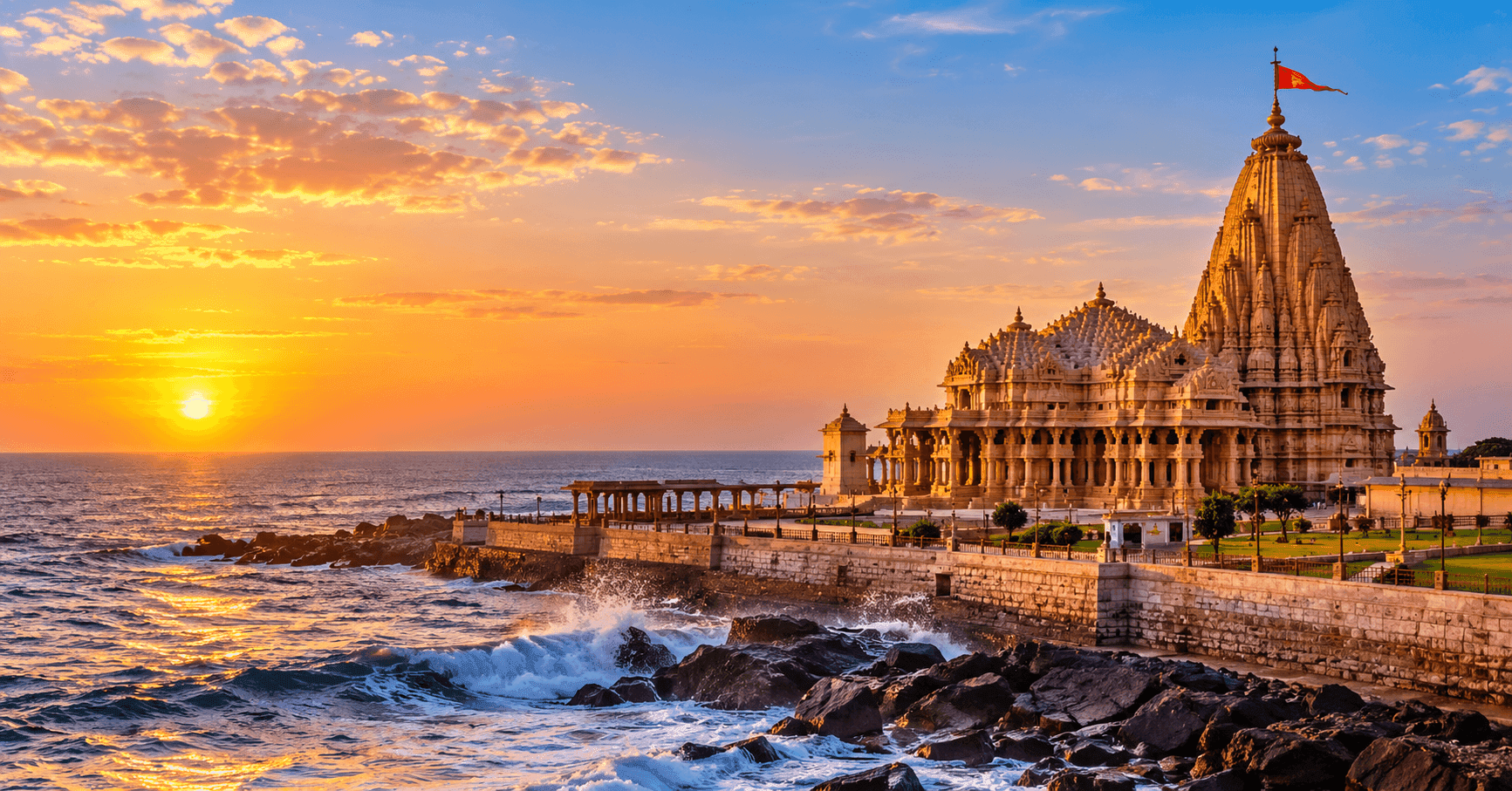
Discover the best places to visit in Somnath during winter, from the Somnath Temple and Bhalka Tirth to scenic coastal spots. Explore local experiences, travel tips and stay options with Sarovar Hotels.
The sound of the Arabian Sea sets the scene as you arrive in Somnath, a coastal town where centuries-old traditions remain part of everyday life. Here, pilgrims make their way towards the revered Somnath Temple, the sea stretches beyond the temple grounds, and nearby sacred sites tell stories associated with Lord Krishna. Together, these experiences give Somnath a character that feels both spiritual and closely connected to the coast.
Winter is a good time to explore the town, with generally more comfortable conditions for temple visits, heritage walks and seaside outings. Whether you are planning a family holiday, a pilgrimage or a short break by the sea, this guide covers the places to visit in Somnath, local experiences, travel tips and accommodation options to help you plan your trip.
Somnath, located in Gujarat's Gir Somnath district, is best known for its religious heritage and its setting along the Arabian Sea. The cooler months, particularly October to February, are generally suitable for sightseeing and pilgrimage activities.
A winter visit lets you explore the main temple, discover nearby sacred sites and spend time along the coast without the intense heat of summer. You can also combine Somnath with a visit to Veraval or plan a longer excursion towards the Gir region.
If you are visiting during a major festival or religious occasion, allow extra time for temple visits and transport, as visitor numbers can increase considerably.
The temples in Somnath reflect the region's religious traditions, architecture and stories associated with Hindu mythology. Start with the main shrine, then explore nearby sites to understand the wider significance of Prabhas Patan.
The Somnath Temple is the main attraction in the town and is traditionally regarded as the first among the twelve Jyotirlinga shrines dedicated to Lord Shiva. Located in Prabhas Patan near Veraval, the temple stands close to the Arabian Sea.
The present structure was reconstructed in the Chalukya style and completed in May 1951. Its stone architecture, towering shikhara and coastal setting make it an important pilgrimage destination as well as a notable architectural landmark.
Look out for the Bana Stambha, or Arrow Pillar, within the temple grounds. The temple complex is also a place to observe the daily rhythm of worship, particularly during aarti.
Visitor information: The Shree Somnath Trust lists darshan timings as 6 am to 10 pm, with aarti at 7 am, noon and 7 pm. Timings and arrangements can change, so check the official temple website before visiting. Mobile phones, cameras and other restricted items are not permitted inside the temple; follow the current instructions for storing belongings.
Bhalka Tirth is a sacred site associated with the story of Lord Krishna's departure from earthly life. According to Hindu tradition, the hunter Jara mistakenly struck Krishna with an arrow while he was resting beneath a tree.
The temple commemorates this episode and contains an image of Krishna in a reclining posture. The site offers a quieter place to reflect on the stories and traditions connected with the wider Prabhas Patan region.
Bhalka Tirth is commonly included in a local pilgrimage circuit with the Somnath Temple and other nearby religious sites.
Gita Mandir is dedicated to Lord Krishna and is known for its marble architecture and pillars inscribed with the eighteen chapters of the Bhagavad Gita. The temple is associated with the religious heritage of the area and can be included in a visit to nearby sacred sites.
The nearby Laxminarayan Temple is dedicated to Lord Vishnu and Goddess Lakshmi. Together, the two temples offer another stop for travellers interested in the religious traditions and architecture of Somnath.
The Old Somnath Temple, also known as Ahilyabai Temple, was built by Maharani Ahilyabai Holkar in the eighteenth century. It is historically significant because it maintained a place of worship for devotees during a period when the main Somnath shrine had faced destruction and conflict.
The older shrine has a different character from the larger, reconstructed temple. If you are interested in the region's religious history, visiting both temples offers a broader understanding of Somnath's pilgrimage traditions.
Dehotsarg Tirth is associated with the traditional account of Lord Krishna's final journey to his divine abode. Located near the Hiran River, the site is an important part of the religious landscape around Somnath.
The nearby Gita Mandir and other shrines can be included in the same outing. Allow time to explore the area at a comfortable pace and follow the customs observed at each place of worship.
Somnath's coastal setting gives the town a character beyond its temples. The shoreline, river confluence and nearby port city offer opportunities to experience the region's natural surroundings and everyday life.
Somnath's coastline is a natural addition to a winter sightseeing itinerary. The sea-facing area near the temple offers views of the Arabian Sea and a place to pause after visiting the shrine.
A walk along the coast can be especially enjoyable in the cooler parts of the day. However, the shoreline can be rocky and the sea may have strong currents. Follow local safety signs and avoid swimming unless authorities have designated a safe area.
Triveni Sangam is the sacred confluence where the Hiran, Kapila and Saraswati rivers are traditionally said to meet the Arabian Sea. It is an important pilgrimage site where visitors come for religious observances and rituals.
Located close to the main Somnath Temple, the sangam can be included in a half-day sightseeing circuit with Gita Mandir and other nearby shrines.
Visitors should follow local guidance around the water and check current conditions before planning any activities along the riverbank.
Veraval, a neighbouring port town, offers a glimpse into the coastal economy of the region. Its harbour is closely associated with commercial fishing and maritime activity, providing a different experience from Somnath's religious attractions.
If you visit, be mindful that the harbour is a working area. Follow local instructions, avoid restricted sections and ask permission before photographing workers or private activities.
Chorwad Beach can be considered if you have additional time for a coastal excursion. Known for its rocky shoreline and surrounding landscape, it offers a change of scenery from the main Somnath area.
Check local access arrangements and sea conditions before travelling. As with other parts of the coast, avoid entering the water where swimming is not permitted.
A well-planned holiday leaves time to explore the town beyond its main shrines. These things to do in Somnath can help you balance pilgrimage, local culture and coastal sightseeing.
The Somnath Temple's evening light and sound show, known as Jay Somnath, presents the temple's history against the illuminated structure and the sounds of the sea.
The Shree Somnath Trust lists the show for the evening, with its current information indicating a start around 7:45 pm. The show may be affected by seasonal conditions, including the monsoon, so confirm the schedule before planning your evening around it.
The streets around the temple and Prabhas Patan have shops selling religious items, souvenirs and locally made products. Depending on the shops available, you may find:
Religious images and small temple souvenirs
Rudraksha beads and prayer items
Bandhani textiles and other Gujarati fabrics
Handicrafts, decorative objects and gift items
Compare products and prices before buying, particularly if you are purchasing several items.
Somnath is a good place to sample Gujarati and Kathiyawadi dishes. Many local eateries serve vegetarian meals, snacks and traditional preparations.
Look out for dishes such as:
Sev Tameta nu Shaak: A tangy tomato curry topped with sev.
Bajra Rotlo: A traditional pearl millet flatbread, often served with accompaniments such as jaggery or butter.
Khichdi and Kadhi: A comforting combination of rice and lentils with a yoghurt-based curry.
Kathiyawadi Thali: A regional meal featuring a selection of vegetables, breads, rice and accompaniments.
Menus vary by restaurant, so ask about ingredients and spice levels if you have specific dietary preferences.
If you have an extra day, consider extending your trip towards the Gir region, known for its Asiatic lion conservation landscape. A wildlife excursion can add a nature-focused experience to a holiday centred on Somnath's temples and coast.
Safari access, routes and timings depend on the specific park or safari area and current forest department arrangements. Book through the official permit system, check the latest availability and allow enough time for travel. Do not assume that a safari can be fitted into a short visit without advance planning.
Three days give you time to explore the main religious sites, enjoy the coast and visit nearby attractions without trying to fit everything into one day.
Morning: Begin with darshan at the Somnath Temple. Allow time for entry procedures and exploring the permitted areas of the complex.
Afternoon: Visit the Old Somnath Temple and explore nearby local markets.
Evening: Take a walk along the seafront and return for the evening aarti or light and sound show, after checking the current schedule.
Morning: Visit Bhalka Tirth and learn about its association with the story of Lord Krishna.
Late Morning: Continue to Dehotsarg Tirth and Gita Mandir.
Afternoon: Visit Triveni Sangam and explore the surrounding area.
Evening: Return to Somnath for dinner and a relaxed evening.
Option A – Coastal Exploration: Visit Veraval Harbour and explore the town's coastal setting. Return to Somnath for lunch and spend your final afternoon by the sea.
Option B – Wildlife Excursion: If you have booked a suitable safari in advance, travel towards the Gir region. Check travel times, permit details and safari arrangements before choosing this option.
Choose one option according to your interests and departure schedule rather than trying to cover both in a single day.
Attraction | Main Experience | Suggested Time |
|---|---|---|
Somnath Temple | Pilgrimage and architecture | 1.5–3 hours |
Bhalka Tirth | Religious heritage | 45–60 minutes |
Gita Mandir | Marble architecture and scripture | 30–60 minutes |
Dehotsarg Tirth | Religious history | 30–60 minutes |
Triveni Sangam | Sacred river confluence | 45–90 minutes |
Veraval Harbour | Coastal and fishing-town life | Allow extra travel time |
These are planning estimates, not official visit durations. Actual time may vary with crowds, local arrangements and your interests.
Somnath is connected to other parts of Gujarat by rail and road. Plan your route according to your starting point and confirm transport schedules before travelling.
By Air: Diu, Porbandar and Rajkot are among the airports travellers may consider when planning a journey to Somnath. The onward distance and travel time differ, so compare flight availability and road connections before booking.
By Train: Somnath Railway Station serves the town, while Veraval is another important rail hub nearby. Check current train services and arrival times, then arrange local transport to your accommodation.
By Road: Somnath is connected by road to destinations across Gujarat. Buses, taxis and private vehicles can be used for travel between Somnath, Veraval and other nearby places. Journey times depend on your route, traffic and road conditions.
Check Temple Timings: Confirm darshan, aarti and light and sound show timings through the official Somnath Temple website before visiting.
Follow Entry Rules: Mobile phones, cameras and other items may be restricted inside the main temple. Check the current list and storage arrangements before arriving.
Dress Respectfully: Choose clothing suitable for a place of worship and follow the instructions of temple staff.
Plan Around Crowds: Festivals and major religious occasions can bring more visitors. Allow extra time for transport and darshan.
Carry Sun Protection: Winter days can still be sunny, particularly along the coast. Water, sunscreen and a hat can be useful.
Respect Coastal Safety Advice: Avoid swimming in unsafe areas and follow instructions displayed along the shoreline.
Book Ahead: If you plan to visit during a holiday or festival, check accommodation and transport availability early.
When comparing hotels in Somnath, consider how easily you can reach the temple, nearby religious sites, local dining options and transport connections. A convenient base can make it easier to explore the town without rushing between attractions.
Sarovar Portico, Somnath is listed on the official Sarovar Hotels website as an accommodation option in the town. It can be considered if you are looking for a branded hotel while planning a pilgrimage or coastal getaway.
Before booking, review the property's current location details, room categories, facilities, rates and availability on the official website. Choose your stay based on your itinerary and travel needs.
Somnath brings together spiritual heritage, coastal scenery and the traditions of Gujarat. From visiting the Somnath Temple and nearby sacred sites to exploring Triveni Sangam, discovering Veraval's coastal life and sampling Kathiyawadi food, the town offers plenty to experience over a few days.
For a comfortable winter trip, plan your temple visits in advance, check current timings and allow time to explore the surrounding area at your own pace. Whether you are travelling for pilgrimage, history or a quiet break by the sea, Somnath can be a rewarding destination to include in your Gujarat itinerary.
Make your winter visit to Somnath comfortable with a stay at Sarovar Portico, Somnath. Whether you are planning a family holiday, a spiritual journey or a relaxing coastal escape, explore the available accommodation options and organise your stay around your sightseeing plans.
For reservations and booking enquiries, contact Sarovar Hotels:
Phone: +91 98 8680 0049
Contact the reservations team to check room availability, rates and booking conditions for your preferred travel dates. Advance booking is recommended during winter holidays and major religious occasions.