
Loading…
Loading…
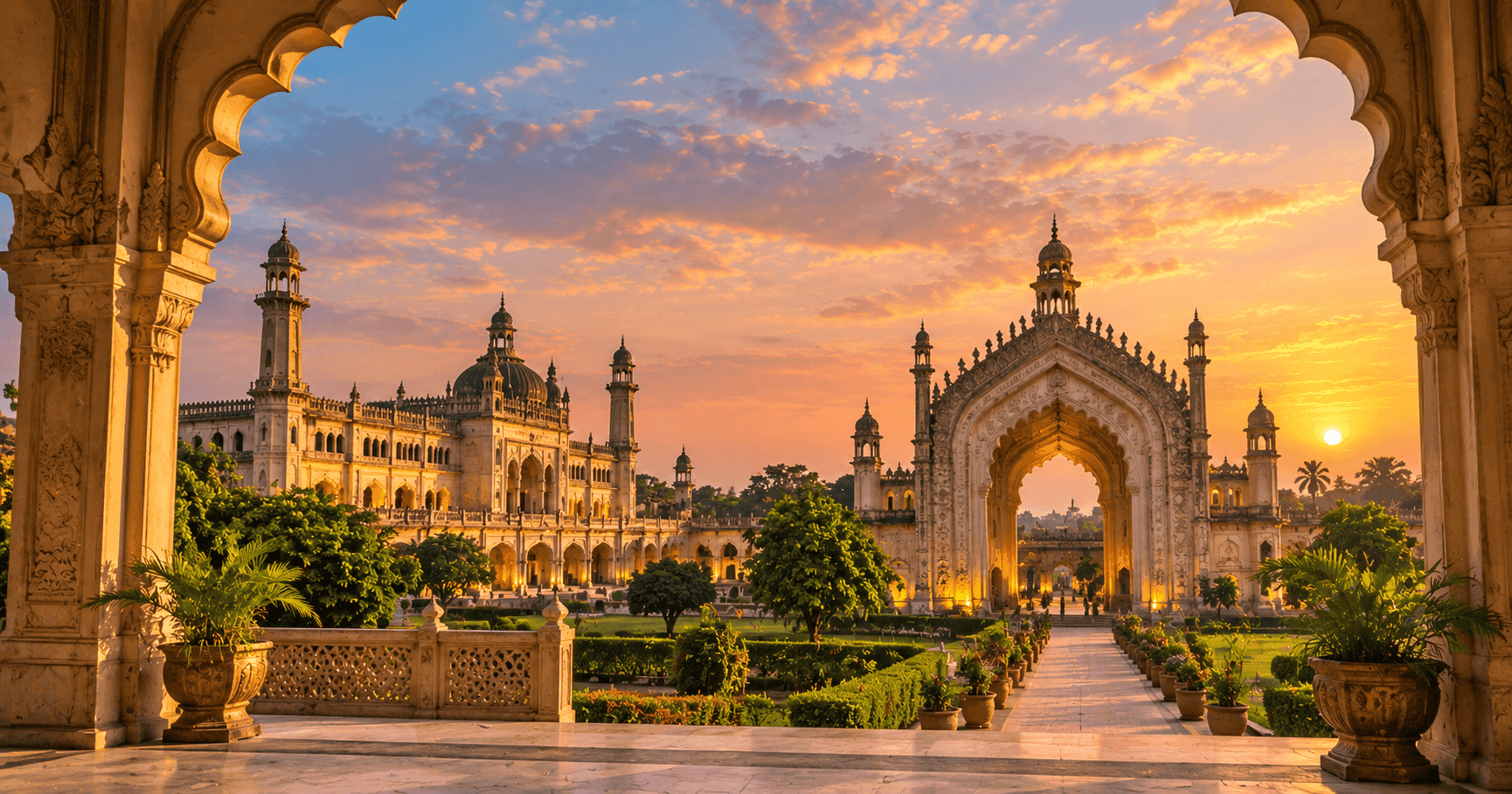
Discover Lucknow in October with Nawabi heritage, historic monuments, Awadhi cuisine, traditional markets and nearby day trips. Explore Bara Imambara, Rumi Darwaza, British Residency, local food and hidden city gems for a relaxed cultural getaway.
October is a good time to explore Lucknow, when the intense summer heat begins to ease and the city enters the festive season. Known for its Nawabi heritage, gracious tehzeeb (etiquette), distinctive architecture and celebrated Awadhi cuisine, Lucknow offers plenty to discover beyond its famous monuments.
From grand gateways and historic Imambaras to traditional markets and food streets, the city's heritage is closely connected with its everyday culture. If you are planning to explore the Lucknow tourist attractions in October, this guide covers the city's major historical sites, cultural experiences, local food, shopping areas and nearby excursions.
Pleasant Autumn Weather: October generally brings more comfortable conditions for sightseeing, although daytime temperatures can still be warm.
Nawabi Heritage: Explore landmarks such as Bara Imambara, Chota Imambara and Rumi Darwaza.
Colonial History: Discover the British Residency and the distinctive architecture of La Martiniere College and Constantia.
Local Culture: Explore Chowk and Hazratganj for Chikankari, traditional crafts, markets and local experiences.
Awadhi Cuisine: Try specialities such as Galouti Kebab, Awadhi biryani, Sheermal, Basket Chaat and seasonal Nimish.
Nearby Excursions: Extend your trip with visits to Dewa Sharif, the Nawabganj Bird Sanctuary or Ayodhya.
October marks the transition from the monsoon season towards cooler months in Lucknow. The weather can still be warm during the day, but mornings and evenings are generally more comfortable for sightseeing than the peak summer months.
The month also falls within India's festive season, with Dussehra and Diwali celebrations taking place depending on the year's calendar. Markets, neighbourhoods and public spaces may feature decorative lights and seasonal activity, adding another layer to the city's atmosphere.
For travellers interested in history and culture, October provides an opportunity to combine heritage walks with local food, shopping and outdoor sightseeing. It is still worth checking the weather forecast before planning a full day outdoors, as conditions can vary.
Lucknow's architectural heritage reflects the city's history under the Nawabs of Awadh as well as later British influence. Several of its most recognisable landmarks can be explored within the older parts of the city.
Built by Nawab Asaf-ud-Daula in the 18th century, Bara Imambara is one of the most recognisable landmarks in Lucknow. The complex is particularly known for its large vaulted central hall and the Bhulbhulaiya, a network of passages located in the upper levels of the building.
The monument is associated with the construction projects undertaken during a famine in Awadh, which provided employment to local workers. Its unusual architecture and maze-like passages make it one of the key places to visit in Lucknow.
If you explore the upper sections, follow the site's visitor guidelines and consider using an authorised guide to understand the layout and history of the complex.
Located near Bara Imambara, Chota Imambara was built during the reign of Muhammad Ali Shah. The monument is known for its ornate interiors, decorative elements and chandeliers.
The nearby Picture Gallery contains portraits associated with the Nawabs of Awadh. The complex also includes the Satkhanda, an unfinished structure that was intended to have seven storeys.
Together, Chota Imambara, the Picture Gallery and the surrounding heritage structures make this area useful to explore as part of a single Old Lucknow sightseeing route.
Rumi Darwaza is one of Lucknow's most distinctive gateways. Built during the reign of Nawab Asaf-ud-Daula, the structure is known for its elaborate design and large arched opening.
Located between the Bara and Chota Imambaras, the gateway can easily be included in a heritage walk through the area. Its detailed architecture also makes it a popular photography stop.
The British Residency offers a different perspective on Lucknow's history. The complex played an important role during the Uprising of 1857 and was the site of the Siege of Lucknow.
Today, the preserved ruins stand within landscaped grounds. Visitors can see damaged sections of the buildings and explore the museum, which contains historical material relating to the Residency and the events of 1857.
The tree-lined grounds also make the site suitable for a quieter morning visit compared with the busier heritage areas of Old Lucknow.
Constantia, the historic building associated with La Martiniere College, is notable for its unusual combination of European and Indian architectural influences. It was built in the late 18th century by Claude Martin, a French adventurer and officer who became associated with the Nawab's court and the East India Company.
The building features ornate facades, statues, terraces and decorative architectural details. Since it is part of an educational institution, access to the premises may be restricted. Check current visitor arrangements before planning a visit.
If you have additional time beyond the main monuments, several lesser-known sites provide a quieter look at the city's architectural history.
Dilkusha Kothi is a historic building whose remaining ruins are surrounded by landscaped grounds. Built in the late 18th or early 19th century, the structure was influenced by European architectural styles.
The building suffered significant damage during the events of 1857, and its surviving sections now offer a glimpse into another period of Lucknow's history.
Located near the Gomti River, Chattar Manzil was associated with the rulers of Awadh. Its name comes from the umbrella-shaped dome that once crowned the building.
The palace combines European and Indian architectural influences and is known for its underground rooms, which helped keep the interiors cooler during hot weather. Access and restoration arrangements can change, so check current visitor information before planning a visit.
Safed Baradari is a white pavilion in the Kaiserbagh area associated with Nawab Wajid Ali Shah. The building was used for ceremonial and mourning gatherings and remains an important part of Lucknow's cultural heritage.
Depending on the schedule, the venue may also host cultural programmes and other events.
A visit to Lucknow is also an opportunity to explore Awadhi cuisine, which is known for slow cooking, aromatic spices and dishes associated with the city's royal kitchens.
If you are looking for famous food in Lucknow, these are some of the specialities worth trying.
Galouti Kebab is one of Lucknow's best-known culinary specialities. The kebabs are made with finely minced meat and a blend of spices, producing a soft texture. Stories about their origin are often linked to the Nawabi court, although versions of the story vary.
Kakori Kebab is another well-known Awadhi preparation. It is traditionally made with finely minced meat and aromatic seasonings before being cooked on skewers.
For travellers interested in trying these dishes, the Chowk and Aminabad areas have several established food outlets.
Awadhi biryani is generally associated with fragrant rice, meat and aromatic spices rather than an aggressively spicy flavour profile. Preparation methods vary between restaurants, so trying it at more than one establishment can offer a useful comparison.
Pair the meal with Sheermal, a mildly sweet, saffron-flavoured flatbread traditionally prepared with milk and ghee. It is often served alongside rich meat dishes and gravies.
Nihari is a slow-cooked meat stew traditionally associated with North Indian cuisine. In Lucknow, it is commonly served with kulcha and is particularly associated with the city's traditional food culture.
If you are exploring Old Lucknow early in the day, this can be a filling breakfast or brunch option.
Basket Chaat, also known as Tokri Chaat, is a popular Lucknow street-food speciality. It combines a crisp potato basket with ingredients such as potatoes, chickpeas, yoghurt and chutneys.
Hazratganj is one of the areas where visitors can look for this popular snack, although specific outlets and recipes may vary.
For dessert, Lucknow offers several traditional options. Kulfi is widely available across the city, while Nimish, also known as Makhan Malai, is a seasonal speciality associated with the cooler months.
Nimish has a light, airy texture and is traditionally prepared by whipping milk and cream. It is often flavoured with ingredients such as saffron and cardamom. Availability can vary depending on the season, so October visitors may find it at selected traditional sweet shops.
Food | What to Expect | Areas to Explore |
|---|---|---|
Galouti Kebab | Soft minced-meat kebab with aromatic spices | Chowk and Aminabad |
Awadhi Biryani | Fragrant rice with meat and aromatic seasoning | Chowk and Hazratganj |
Nihari Kulcha | Slow-cooked meat stew served with kulcha | Old Lucknow |
Basket Chaat | Crisp potato basket with chutneys, yoghurt and savoury toppings | Hazratganj |
Nimish / Makhan Malai | Light, airy seasonal milk-based sweet | Chowk and traditional sweet shops |
If you have more than three days, you can add a nearby destination to your itinerary. These places to visit near Lucknow offer a mix of nature, spirituality and heritage.
Located near the Lucknow-Kanpur route, Nawabganj Bird Sanctuary is a wetland destination that can be considered for a nature-focused day trip.
The sanctuary is known for birdlife, wetlands and walking areas. Bird sightings vary by season, so visitors interested in migratory species should check current conditions before travelling.
Dewa Sharif, in Barabanki district, is associated with Sufi saint Haji Waris Ali Shah and is an important pilgrimage destination.
The shrine can be visited as a short excursion from Lucknow. If you are travelling around the time of the annual Dewa Mela, check the official schedule because dates and programmes vary each year.
Ayodhya is another possible longer day trip from Lucknow. The city is an important religious and historical destination with temples, ghats and other sites associated with its cultural heritage.
Because travel time can vary with traffic and road conditions, start early if you plan to visit Ayodhya and return to Lucknow on the same day.
A three-day itinerary allows you to combine major monuments with food, shopping and some of the city's less-visited attractions.
Morning: Start with Bara Imambara, including the Bhulbhulaiya, and then walk towards Rumi Darwaza.
Afternoon: Continue to Chota Imambara and the nearby Picture Gallery. Later, explore the food streets of Old Lucknow and try Galouti Kebabs or Nihari Kulcha.
Evening: Walk through Chowk, browse Chikankari shops and explore traditional markets. End the day with kulfi or another local dessert.
Morning: Visit the British Residency and spend time exploring its preserved ruins and museum.
Afternoon: See the architecture of La Martiniere College and Constantia from permitted areas before heading towards Hazratganj for lunch and shopping.
Evening: Visit Ambedkar Memorial Park or another city attraction before dinner. This is also a good evening to explore more of Lucknow's Awadhi cuisine.
Morning: Visit Dilkusha Kothi, Safed Baradari or another heritage site depending on opening arrangements.
Afternoon: Choose between a short excursion to Nawabganj Bird Sanctuary or additional time for shopping in Hazratganj and Chowk.
Evening: Return to the city and take a relaxed walk around the Gomti River area before your final dinner.
A little planning can make it easier to cover Lucknow's spread-out attractions while leaving enough time for food and local markets.
Plan Outdoor Sightseeing Early: October afternoons can still be warm, so schedule walking-heavy heritage visits for the morning or late afternoon.
Wear Comfortable Shoes: Old Lucknow includes narrow lanes, uneven surfaces and stairs at some heritage sites. Comfortable footwear will make sightseeing easier.
Dress Respectfully: Follow the dress and photography rules at religious sites. Some locations may also require visitors to remove their footwear.
Carry Water and Sun Protection: Even during the cooler season, daytime sightseeing can involve significant exposure to the sun.
Keep Cash Handy: Digital payments are widely used, but smaller shops and street-food vendors may still prefer cash.
Check Opening Hours: Heritage buildings, museums and restored sites can have specific visiting hours or access restrictions. Check the latest information before travelling.
Allow Extra Time for Traffic: Attractions are spread across different parts of Lucknow, so allow sufficient travel time between Old Lucknow, Hazratganj and Gomti Nagar.
When planning your accommodation, exploring hotels in Lucknow can help you choose a stay based on your preferred location, access to sightseeing areas, dining options and overall itinerary.
Choosing a convenient hotel in Lucknow can make it easier to balance sightseeing, dining and shopping during your stay.
Grand Sarovar Portico, Lucknow offers accommodation and guest facilities for travellers visiting the city for leisure or business. Its location can be considered when planning an itinerary that combines Lucknow's heritage attractions, shopping areas and food experiences.
For a stay in the city, consider factors such as the hotel's location, room type, dining options and how easily you can reach the attractions on your itinerary. Booking ahead can also be useful during busy festive periods.
Lucknow brings together architectural heritage, Awadhi food, traditional crafts and a distinctive cultural identity. From exploring the Lucknow tourist attractions around Bara Imambara and Rumi Darwaza to discovering Chikankari in Chowk and sampling local kebabs and seasonal sweets, the city offers plenty to experience over a few days.
October can be a comfortable month for exploring the city, although daytime temperatures may still be warm. Plan outdoor sightseeing for cooler parts of the day, keep some flexibility in your itinerary and check attraction timings before you travel.
For travellers planning a longer stay, choosing a convenient hotel in Lucknow can make it easier to combine heritage visits, food experiences, shopping and nearby excursions in one itinerary.
Sarovar Hotels offers travellers a convenient accommodation option for exploring Lucknow's heritage, cuisine and cultural experiences while enjoying a comfortable stay.
Make your October in Lucknow memorable with heritage walks, Awadhi cuisine, traditional markets and cultural experiences. Stay at Grand Sarovar Portico, Lucknow, and enjoy a comfortable base for exploring the city's historic attractions and local gems.
📞 Call: +91 98 8680 0049
📧 Email: reservation@sarovarhotels.com
Plan your Lucknow getaway with Sarovar Hotels and experience the city's heritage, culture and cuisine with ease.