
Loading…
Loading…
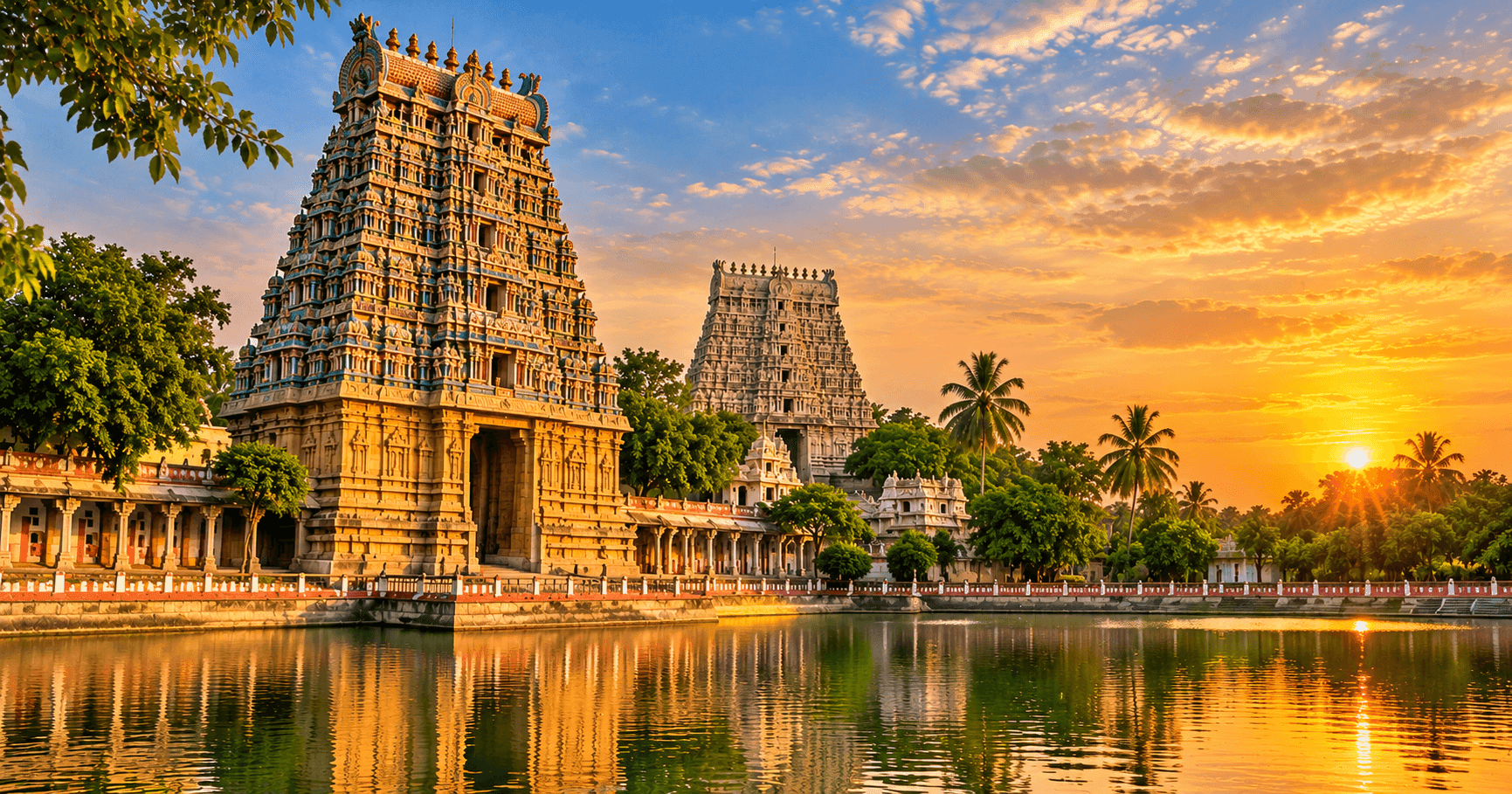
Plan a short heritage year-end holiday trip to Sriperumbudur in 2026. Explore historic temples, discover places to visit, experience local traditions and find comfortable accommodation at Sarovar Portico, Sriperumbudur.
Some journeys are about discovering new places. Others take you back in time, introducing you to stories, traditions and remarkable landmarks that have shaped a region for centuries. If the latter sounds appealing, how about spending the final days of 2026 exploring the heritage of Sriperumbudur?
Located near Chennai in Tamil Nadu, Sriperumbudur may be widely recognised as an industrial hub today, but its roots run much deeper. The town is the birthplace of the revered philosopher Sri Ramanuja, home to historic temples and the Rajiv Gandhi Memorial, and a convenient starting point for exploring the architectural treasures of nearby Kanchipuram.
For travellers who appreciate history, spirituality and traditional craftsmanship, a short Sriperumbudur tourism experience offers plenty to discover without the need for an elaborate holiday itinerary.
Whether you're travelling with family, exploring Tamil Nadu's cultural heritage or simply looking for a meaningful way to end the year, here's your guide to the best places to visit in Sriperumbudur, nearby heritage attractions, a two-day itinerary and accommodation options. You can also explore Sarovar Hotels when planning a comfortable stay for your Tamil Nadu getaway.
Heritage highlights: Sriperumbudur is known for Sri Ramanuja's birthplace, the Adi Kesava Perumal Temple and the Rajiv Gandhi Memorial.
Nearby attractions: Vallakottai Murugan Temple and Kanchipuram's historic temples offer worthwhile cultural excursions.
Unique experiences: Discover Dravidian temple architecture, learn about Sri Vaishnava traditions and explore Kanchipuram's silk-weaving heritage.
Best time to visit: December and January generally offer more comfortable sightseeing conditions than peak summer, although rainfall is still possible in December.
Ideal duration: A two-day trip is suitable for exploring Sriperumbudur's landmarks and spending a day in Kanchipuram.
Not every year-end getaway needs to revolve around crowded tourist destinations or elaborate celebrations. Sometimes, a short journey that introduces you to a different side of a familiar region can be equally rewarding.
Sriperumbudur, situated approximately 40 km southwest of Chennai, offers just that.
The town is closely associated with Sri Ramanuja, the influential Hindu philosopher and theologian who played an important role in the development of the Vishishtadvaita tradition. Its temples continue to preserve religious customs and architectural elements associated with Tamil Nadu's cultural heritage.
There's also a modern chapter to explore. The Rajiv Gandhi Memorial provides an opportunity to reflect on a significant event in independent India's history.
And when you venture beyond the town, Kanchipuram awaits with its ancient Pallava-era temples, grand gateways and centuries-old silk-weaving traditions.
Together, these destinations create an interesting heritage trail for travellers who prefer meaningful experiences over a packed sightseeing checklist. For a convenient stay during your trip, you can explore Sarovar Hotels and consider accommodation at Sarovar Portico, Sriperumbudur.
Sriperumbudur's heritage attractions are relatively concentrated, making it possible to explore the town's important landmarks without spending the entire day travelling between locations.
Here are three places that deserve a spot on your itinerary.
If there's one landmark that defines Sriperumbudur's spiritual identity, it's the Adi Kesava Perumal Temple, also known as the Ramanujar Temple.
Dedicated to Lord Vishnu, worshipped here as Adi Kesava, the temple is closely associated with Sri Ramanuja, who was born in Sriperumbudur in 1017 CE according to traditional accounts.
The temple's Dravidian architecture, sculpted pillars and religious traditions reflect its longstanding importance in the Sri Vaishnava community. One of its distinctive features is a gold-plated shrine associated with Ramanuja, commissioned by the Maharaja of Mysore.
Beyond its architecture, the temple offers an opportunity to understand the teachings and legacy of a philosopher whose influence extends far beyond Tamil Nadu.
Spend some time observing the temple's architectural details, learning about its significance and appreciating the traditions that remain part of daily worship.
Why visit: Religious heritage, temple architecture and the legacy of Sri Ramanuja.
Travel tip: The temple generally has separate morning and evening visiting hours, with an afternoon closure. Plan your visit accordingly and follow all temple rules, including photography restrictions.
Sriperumbudur is also associated with one of the most significant events in modern Indian political history.
The Rajiv Gandhi Memorial stands at the site where former Prime Minister Rajiv Gandhi was assassinated on 21 May 1991.
The memorial features landscaped grounds, a commemorative structure and seven pillars representing important values and symbolic associations with India's sacred rivers.
Unlike a conventional tourist attraction, this is a place intended for remembrance and reflection.
A visit allows travellers to learn about the historical event and reflect on its significance in India's political history.
For families travelling with older children, it can also provide an opportunity to discuss an important chapter in the country's recent past.
Why visit: Modern Indian history and remembrance.
Travel tip: Allow time to explore the memorial respectfully. Check current visiting hours and any restrictions before travelling.
A short journey from Sriperumbudur brings you to Vallakottai Murugan Temple, another important religious landmark in the region.
Dedicated to Lord Murugan, the temple is known for its traditional Dravidian architecture and prominent standing idol of the deity.
Its entrance features a five-tiered rajagopuram, or temple gateway tower, leading into a complex with pillared halls and a sanctum.
The temple also finds mention in Thiruppugazh, a collection of devotional hymns composed by the Tamil poet-saint Arunagirinathar.
For travellers interested in understanding the cultural and religious traditions of Tamil Nadu, this temple offers a different experience from Sriperumbudur's Vishnu shrine.
Why visit: Tamil religious traditions, temple architecture and cultural heritage.
Travel tip: Combine Vallakottai Murugan Temple with your Sriperumbudur sightseeing. Check the afternoon closing hours before planning the visit.
Once you've discovered Sriperumbudur's landmarks, extend your heritage trail to nearby Kanchipuram.
Located approximately 30 km from Sriperumbudur, Kanchipuram is celebrated for its ancient temples, intricate stone carvings and silk-weaving traditions.
Often called the City of Thousand Temples, it has been an important centre of religion, architecture and craftsmanship for centuries.
If you're searching for tourist places near Sriperumbudur, these Kanchipuram experiences are particularly worth considering.
For anyone fascinated by ancient architecture, Kailasanathar Temple is a remarkable place to explore.
Dedicated to Lord Shiva, this historic temple is associated with the Pallava dynasty and King Narasimhavarman II, also known as Rajasimha.
The temple's sandstone sculptures, detailed carvings and distinctive architectural design make it an important example of early South Indian temple architecture.
Unlike the towering entrance gateways found at many later temples, Kailasanathar is particularly admired for its sculpted shrines and intricately decorated walls.
Take your time exploring the permitted areas and observing the craftsmanship.
Why visit: Pallava history, ancient sculptures and Dravidian architecture.
Travel tip: Visit during the morning or evening opening hours. Follow any conservation-related restrictions while exploring the monument.
Want to experience the impressive scale of South Indian temple architecture? Ekambareswarar Temple is worth adding to your route.
Dedicated to Lord Shiva, the temple is one of the Pancha Bhoota Sthalams, five sacred Shiva temples associated with the natural elements. Ekambareswarar represents the earth element.
Its towering entrance gateway, spacious courtyards, pillared halls and revered mango tree are among its notable features.
The temple complex reflects architectural contributions from different historical periods, including the Vijayanagara era.
For visitors interested in religious traditions and monumental architecture, it's an opportunity to see how craftsmanship and spirituality have shaped the region.
Why visit: Grand temple architecture, Hindu religious traditions and historical craftsmanship.
Travel tip: Check temple timings before travelling, as the shrine generally closes for part of the afternoon.
Another important landmark in Kanchipuram is Kamakshi Amman Temple, dedicated to Goddess Kamakshi.
Located in the heart of the city, this historic shrine holds an important place in the Shakta tradition of Hinduism.
The temple is known for its religious significance, traditional architectural elements and continued role as a centre of worship.
Unlike a heritage monument visited solely for its architecture, Kamakshi Amman Temple offers an opportunity to experience a living religious tradition.
Visitors can observe the temple surroundings, learn about the significance of the goddess and appreciate the atmosphere of this important pilgrimage site.
Why visit: Spiritual heritage, temple traditions and religious architecture.
Travel tip: Allow time for darshan queues, particularly around religious occasions. Follow the temple's dress code and visitor guidelines.
Not all heritage is preserved in stone monuments. Sometimes, it lives on through the skills and traditions passed down from one generation to another.
Kanchipuram's silk-weaving industry is a wonderful example.
The city is known for its Kanchipuram silk sarees, which carry a Geographical Indication (GI) registration recognising their regional identity.
Traditionally woven using mulberry silk and zari, these sarees are celebrated for their contrasting borders, intricate patterns and distinctive designs.
Many motifs draw inspiration from temple architecture, flowers, birds and other elements of the natural world.
Spend some time visiting established silk shops and learning about the craftsmanship behind the textiles. If you're especially interested in weaving, enquire about authorised workshop visits or demonstrations.
Why visit: Traditional craftsmanship, textile heritage and shopping.
Travel tip: Choose established retailers and ask about fabric composition, weaving techniques and authenticity when purchasing silk sarees.
A heritage trip becomes more interesting when you take time to understand the places you visit instead of simply moving between landmarks.
Here are a few ways to make your journey more memorable.
Look beyond the towering entrance gateways and admire the smaller details.
The sculpted pillars, decorative motifs, inscriptions and temple layouts reflect architectural styles developed over different historical periods.
Comparing the temple architecture in Sriperumbudur and Kanchipuram can be particularly interesting, as it highlights different traditions and influences.
Sriperumbudur's association with Sri Ramanuja is an important part of its identity.
If you're interested in philosophy or religious history, take time to learn about his teachings and influence on Sri Vaishnavism.
Understanding this connection can make your visit to Adi Kesava Perumal Temple more meaningful.
Exploring heritage is hungry work!
Start your day with a traditional South Indian breakfast featuring idli, dosa, vada and filter coffee.
For lunch, look for regional vegetarian meals served with rice, sambar, rasam and seasonal accompaniments.
An unhurried meal between sightseeing stops provides a welcome break and another opportunity to experience the region's everyday culture.
If you're extending your trip to Kanchipuram, leave time to explore its silk markets.
Whether you're purchasing a saree or simply learning about traditional textiles, the weaving heritage adds another layer to your cultural experience.
You can also explore local shops for handicrafts and souvenirs that reflect the region's traditions.
A short year-end getaway doesn't need an exhausting schedule. With two days, you can explore Sriperumbudur's heritage landmarks and dedicate time to the architectural and craft traditions of Kanchipuram.
Here's how to plan your trip.
Morning: Visit Adi Kesava Perumal Temple
Begin with a traditional South Indian breakfast before heading to Adi Kesava Perumal Temple.
Explore the temple's architecture and learn about its association with Sri Ramanuja.
Late Morning: Visit Rajiv Gandhi Memorial
Continue to the Rajiv Gandhi Memorial to explore an important site in modern Indian history.
Take time to understand its significance rather than treating it as a quick photography stop.
Afternoon: Enjoy Lunch and a Short Break
After lunch, return to your hotel or spend some time relaxing.
This also allows you to avoid arriving at temples during their afternoon closure hours.
Late Afternoon: Explore Vallakottai Murugan Temple
Visit Vallakottai Murugan Temple during its evening opening hours to admire its traditional architecture and religious surroundings.
Evening: Relax at Your Hotel
End the day with a leisurely dinner and prepare for your Kanchipuram excursion the next morning.
Morning: Discover Kailasanathar Temple
Set out after breakfast for Kanchipuram.
Begin with Kailasanathar Temple, where you can admire Pallava-era sculptures and architectural details.
Late Morning: Visit Ekambareswarar Temple
Continue to Ekambareswarar Temple to explore its grand gateway, pillared halls and historic surroundings.
Afternoon: Enjoy Lunch and Explore Silk Markets
Take a lunch break before visiting Kanchipuram's silk shops.
Learn about traditional weaving and browse the available textiles at a comfortable pace.
Late Afternoon: Visit Kamakshi Amman Temple
If time permits, visit Kamakshi Amman Temple during its evening visiting hours before returning to Sriperumbudur.
Planning tip: Don't try to explore every temple in Kanchipuram in one day. Prioritise two or three attractions that interest you most and leave time for the city's textile heritage.
December can be a suitable time to explore Sriperumbudur and Kanchipuram, particularly if you prefer sightseeing without the intense summer heat.
However, the region experiences tropical weather rather than the cold winters associated with northern India.
There's another important consideration: October to December is the northeast monsoon season in Tamil Nadu, so rainfall can still affect travel plans towards the end of the year.
Travel Factor | What to Expect in December | Planning Advice |
|---|---|---|
Temperature | Generally more comfortable than peak summer | Wear light, breathable clothing |
Rainfall | Rain is possible during the northeast monsoon season | Carry an umbrella and check forecasts |
Temple visits | Separate morning and evening opening hours are common | Plan sightseeing around afternoon closures |
Holiday travel | Some routes and religious attractions may be busy | Allow extra travel time |
Outdoor sightseeing | Conditions depend on rainfall and humidity | Keep the itinerary flexible |
For an enjoyable heritage trip, start sightseeing early, leave time for breaks and check weather updates before travelling between towns.
A little planning can help you make the most of your short holiday.
Choose a practical sightseeing route: Explore Sriperumbudur's local attractions on one day and reserve another for Kanchipuram.
Check temple timings: Many temples close during the afternoon, so plan around their morning and evening visiting sessions.
Dress respectfully: Wear modest, comfortable clothing suitable for religious sites and follow footwear and photography rules.
Arrange transport in advance: A private car or pre-booked taxi can make travelling between temples and nearby towns more convenient.
Monitor the weather: December rainfall may affect road journeys and outdoor sightseeing.
Allow time for cultural experiences: Don't rush through temple visits or silk shopping simply to cover more attractions.
Confirm holiday arrangements: If you're travelling around 31 December 2026 or 1 January 2027, check for any changes in temple access, transport or local services.
A comfortable stay with convenient access to local attractions can make your heritage getaway more enjoyable. Among the hotels in Sriperumbudur, Sarovar Portico, Sriperumbudur, located on the Chennai-Bengaluru Highway at Mambakkam Village, offers a convenient base for exploring the region.
Here's what you can look forward to:
Convenient Location: Situated approximately 6 km from Sri Ramanujar Temple, with road connectivity for excursions to Kanchipuram and nearby heritage attractions.
Comfortable Accommodation: Choose from 156 well-appointed rooms and suites suited to different travel requirements.
Dining Options: Enjoy regional Tamil Nadu specialities and international dishes at SPR Kitchen, or unwind with drinks and small plates at Chola Lounge Bar.
Leisure Facilities: Relax by the swimming pool or make use of the hotel's spa and fitness centre after a day of sightseeing.
Whether you're travelling with family or planning a cultural getaway with your partner, Sarovar Portico brings together accommodation, dining and leisure facilities for a comfortable short stay.
Explore Sarovar Hotels and plan your year-end heritage getaway at Sarovar Portico, Sriperumbudur.
Make your year-end getaway memorable with a comfortable stay at Sarovar Portico, Sriperumbudur. Enjoy well-appointed accommodation, delightful dining and relaxing leisure facilities while exploring the region's temples, historical landmarks and cultural attractions.
For room reservations and booking enquiries, contact Sarovar Portico, Sriperumbudur directly:
Phone: +91 44 6715 6700
Mobile: +91 89 2586 4053
Email: spspr@sarovarhotels.com
You can also explore the official Sarovar Portico, Sriperumbudur website for more details.
Book your stay today and make your Sriperumbudur heritage getaway memorable!