
Loading…
Loading…
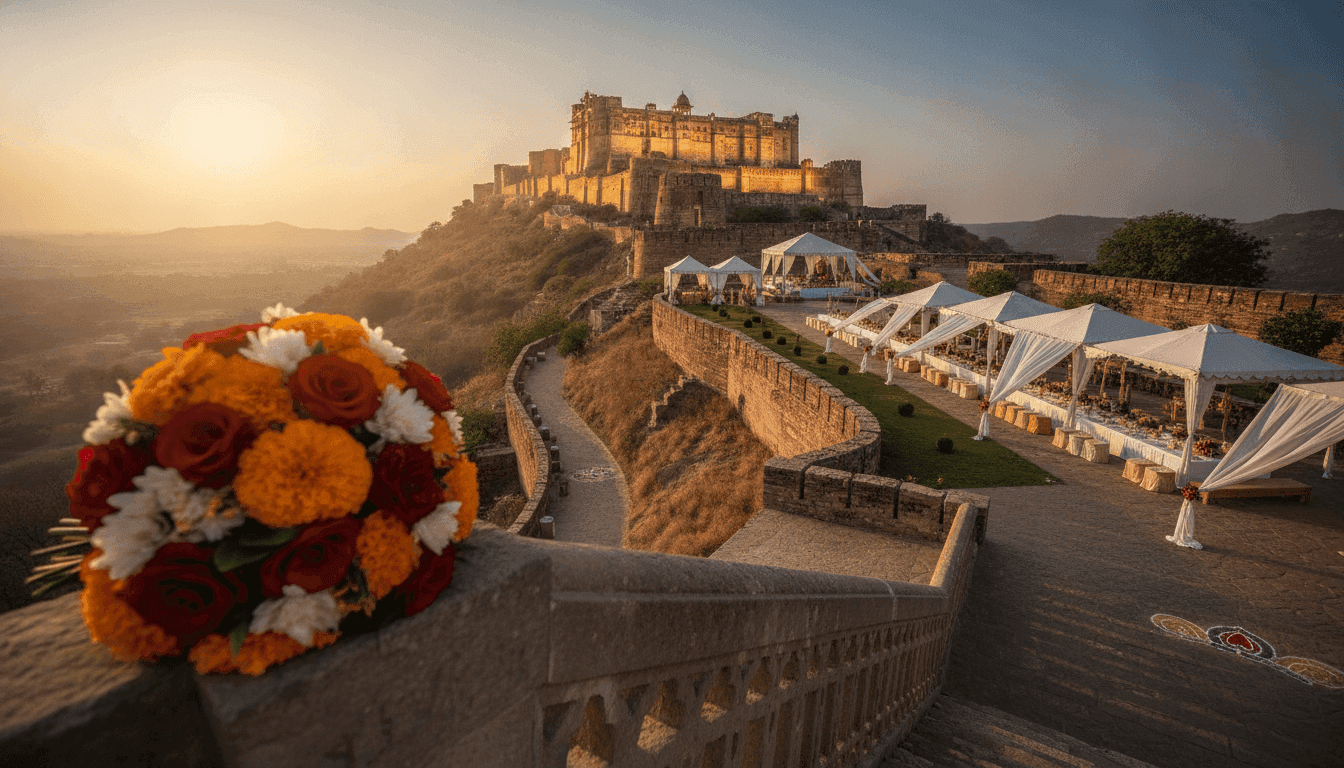
Plan your Alwar wedding with this complete guide to wedding venues, destination planning, budgets, planners and vendors. Explore practical booking tips, guest arrangements, timelines and ideas for organising every wedding function smoothly.
Planning a wedding involves much more than choosing a beautiful venue. From selecting the right location and arranging guest accommodation to coordinating décor, catering, photography and multiple wedding functions, every detail needs to work together. Alwar offers an appealing setting for couples looking to combine Rajasthan’s heritage and scenic surroundings with convenient wedding arrangements.
Whether you are planning an intimate family celebration or a larger destination wedding in Alwar, choosing the right venue and planning services early can make the entire experience more organised. This guide covers the key things to consider when planning a wedding in Alwar, including venue options, budgets, vendors, planners and a practical planning timeline.
Alwar offers a distinctive setting for couples who want their wedding to feel different from a conventional city celebration. Located in Rajasthan and surrounded by the Aravalli landscape, the city combines heritage character with access to modern hospitality and event facilities.
Its location also makes it practical for guests travelling from Delhi-NCR and other parts of North India. Depending on the wedding style and guest list, couples can plan everything from a compact celebration to a multi-function destination wedding with accommodation and events arranged around the same location.
For couples considering an Alwar destination wedding, the city can provide opportunities to bring together the wedding, accommodation and sightseeing experience while giving guests a chance to explore the destination.
One of the biggest attractions of getting married in Alwar is the variety of settings available. The city's heritage character can complement traditional ceremonies, while hotels, resorts, banquet spaces and outdoor venues can be adapted for contemporary celebrations.
The choice of setting should depend on the atmosphere you want to create. A grand indoor venue may work well for a reception or large gathering, while an outdoor space can be suited to functions such as a mehendi, haldi or intimate evening celebration.
When selecting among hotels in Alwar, consider more than the appearance of the property. Guest rooms, event spaces, dining arrangements, accessibility and the ability to host multiple functions can significantly influence how smoothly the wedding is managed.
Alwar can accommodate several wedding formats depending on your guest count, budget and preferred atmosphere. Couples may choose a traditional Rajasthani-inspired celebration, a contemporary hotel wedding, an intimate family gathering or a destination-style wedding spread across several functions.
A multi-function wedding could include a mehendi and haldi during the day, followed by a sangeet or cocktail evening and the main wedding or reception. If guests are travelling from outside Alwar, combining accommodation and events at or near the venue can also reduce unnecessary movement.
Choosing the right venue is one of the earliest and most important decisions in the planning process. Instead of selecting a location solely on its appearance, compare the venue's capacity, event spaces, catering arrangements, accommodation options, accessibility and booking terms.
Hotels and resorts can be convenient for weddings because they can bring several requirements together under one roof. Depending on the property, couples may be able to arrange accommodation, dining and different wedding functions at the same location.
This option can be especially useful for destination weddings where guests are travelling from another city. Having rooms close to the event spaces can make transportation easier and allow the family to spend more time together throughout the celebration.
Before booking, ask about banquet capacity, room availability, catering packages, décor policies, parking and whether multiple functions can be hosted across different spaces.
Heritage-style venues can add a strong sense of place to a wedding in Rajasthan. Architectural details, traditional surroundings and the overall character of the property can create a distinctive backdrop for ceremonies and photographs.
However, heritage appeal should be balanced with practical requirements. Check whether the venue has sufficient guest accommodation, comfortable event areas, accessible entrances, parking and facilities for elderly guests or families travelling with children.
An Alwar marriage garden can be suitable for couples looking for an open setting or a venue that can accommodate larger gatherings. Marriage gardens and banquet halls may offer flexibility for décor, seating arrangements and stage setups, depending on the venue's rules.
For outdoor venues, ask about weather contingencies, power backup, washroom facilities, parking and arrangements for catering. It is also important to clarify whether outside decorators, caterers or entertainment vendors are permitted.
Smaller celebrations do not necessarily require a large banquet hall. An intimate venue, terrace, garden or compact event space can create a more personal setting for ceremonies involving close family and friends.
Outdoor venues can work particularly well for daytime mehendi functions, haldi ceremonies or evening gatherings. However, the season should be considered carefully, along with seating, lighting and a backup indoor arrangement.
Start with the expected guest count before shortlisting venues. A venue that feels spacious for 100 guests may not provide the same comfort for 400, while a very large venue can make a smaller gathering feel less intimate.
Also consider whether different functions will have different guest counts. Your sangeet, wedding ceremony and reception may not require identical seating arrangements. A venue with flexible spaces can therefore be more practical than one designed around a single capacity.
For a destination wedding, the location should work for both the couple and the guests. Look at accessibility from major transport points, nearby accommodation, local transportation and the distance between the venue and places your guests may want to visit.
If several functions are planned, hosting them at one property or within a convenient area can simplify logistics and reduce travel time.
Guest accommodation should be planned early, particularly when your wedding date falls during a busy travel or wedding season. Estimate the number of rooms required based on families, couples, elderly guests and children rather than simply dividing the guest count by two.
Transportation should also be considered for guests arriving from outside Alwar. Share clear arrival information and, where necessary, arrange transfers between railway stations, hotels and venues.
A wedding with several functions needs a realistic schedule. Avoid placing events too close together, particularly when the same décor team, makeup artists or photographers will be moving between locations.
Create a function-wise schedule covering venue setup, vendor arrival, family preparation, guest arrival, ceremonies, meals and photography. Sharing this schedule with vendors and close family members can prevent confusion during the wedding week.
Décor should complement the venue rather than overwhelm it. Discuss your preferred theme, colour palette, floral arrangements, lighting and stage design with the decorator well before the event.
Catering also deserves careful planning. Consider the number of meals, regional preferences, dietary requirements and whether separate menus are needed for different functions. Conduct a tasting where possible and confirm the final menu, service style and inclusions in writing.
A wedding planner in Alwar can help coordinate different elements of the celebration, including venue arrangements, décor, vendors, guest logistics and event schedules. The exact scope depends on whether you choose full-service planning or assistance with selected aspects of the wedding.
A planner can also act as a central point of communication between the couple, venue and vendors, which can be particularly useful when family members are travelling from different cities.
When comparing planners, look at the services included in their proposal. These may cover venue coordination, décor management, vendor sourcing, guest transportation, hospitality, event-day coordination and scheduling.
Ask for a detailed quotation rather than relying only on a package headline. It should be clear which services are included and which expenses will be charged separately.
Full-service planning may be suitable for couples who want someone to coordinate most aspects of the wedding from planning through execution. Partial planning can work when the couple has already booked the venue or selected some vendors but needs professional support with the remaining arrangements.
The right approach depends on how much involvement you want in the planning process, your available time and the complexity of the wedding.
Before finalising a planner, ask about previous wedding experience, services included, vendor coordination, payment schedules and cancellation terms. You should also understand who will be present on the actual wedding day.
Request a clear proposal covering responsibilities, timelines and costs. This helps avoid misunderstandings later and makes it easier to compare different planners.
The venue and food can account for a significant portion of the wedding budget. Costs may vary depending on the property, guest count, menu, number of functions, event duration and season.
Rather than considering only the venue rental, calculate the complete venue-related expense, including catering, taxes, service charges, décor restrictions and additional event requirements.
Décor requirements can vary considerably depending on the number of functions and the complexity of the setup. Photography and videography costs can also change based on the number of hours, photographers required and deliverables included.
Entertainment may include a DJ, live performers, traditional artists or other forms of programming. Decide which elements are priorities for your celebration before allocating the budget.
For a destination wedding, accommodation and transportation need to be included from the beginning rather than treated as last-minute expenses.
Estimate the number of rooms required, number of nights and transport requirements for guests. If the venue provides accommodation, ask whether wedding-related room blocks or group arrangements are available.
Planner fees and vendor charges should be considered separately. Some vendors charge fixed fees, while others price services based on guest count, hours, materials or the number of functions.
Maintain a central budget sheet containing vendor quotations, advance payments, pending balances and additional charges. This makes it easier to track the actual wedding spend.
Start by dividing your budget into major categories such as venue and food, accommodation, décor, photography, entertainment, beauty services, transportation and contingency expenses.
Prioritise the elements that matter most to you instead of spending equally across every category. Booking important vendors early can also give you more time to compare packages and avoid last-minute decisions.
Keep a contingency amount aside for unexpected requirements such as additional transportation, décor changes, extra rooms or extended event hours.
Your caterer and decorator have a major influence on the overall guest experience. When comparing caterers, review menu options, tasting opportunities, service style and the number of staff provided.
For décor, discuss the complete setup including stage, seating, entrance, lighting, floral arrangements and function-specific themes. Confirm whether the venue has any restrictions on installations or outside vendors.
Choose photographers based on the style of photography you prefer, whether that is candid, traditional, documentary or a combination.
Before booking, clarify the number of photographers and videographers, coverage hours, edited photographs, albums, video deliverables and expected delivery timeline.
Makeup and mehendi services should be booked according to the number of people requiring services and the wedding schedule. The bride may require considerably more preparation time than other members of the wedding party.
Share your function schedule with the artists so they can plan appointments around ceremonies and photography sessions.
Depending on your celebration, you may need DJs, live performers, anchors, choreographers, sound and lighting teams, invitation designers or transport providers.
Create a complete vendor checklist so that smaller but essential services do not get overlooked during the final weeks.
Begin by deciding the approximate wedding date, guest count and overall budget. Shortlist venues and visit the properties before making a booking.
This is also a good time to research wedding planners, photographers, decorators and caterers, particularly if you have specific vendors in mind.
Once the venue is confirmed, start finalising major vendors and the overall décor direction. Guest accommodation should also be reviewed if you are organising a destination wedding.
Create a preliminary schedule for the different functions and start coordinating requirements with the venue and planner.
At this stage, confirm vendor bookings, menus, décor details, guest transportation and accommodation requirements. Finalise invitations and track RSVPs so that the guest count becomes more accurate.
Share the event schedule with important vendors and family members involved in the arrangements.
Use the final month to reconfirm every major booking. Check vendor arrival times, room requirements, transport arrangements, décor setup and event schedules.
During the wedding week, keep one person or coordinator responsible for handling vendor communication so the couple and immediate family can focus on the celebrations.
Popular venues and experienced vendors can have limited availability during busy wedding periods. Starting early gives you more time to compare options and coordinate multiple services.
Make guest convenience a priority. Share accommodation details, arrival instructions and event schedules clearly so that visitors know where they need to be and when.
Outdoor celebrations require a contingency plan. Discuss an alternative indoor arrangement with the venue and confirm how quickly the setup can be changed if weather conditions affect the event.
Avoid overloading the wedding itinerary. Allow enough time between functions for guests to move, vendors to reset the venue and family members to prepare.
A practical schedule helps the celebration feel organised without making guests feel rushed.
Choosing the right venue can simplify many parts of wedding planning, particularly when you need event spaces, accommodation and hospitality to work together. Sarovar Hotels offers wedding venues across destinations in India, with dedicated wedding services designed around different celebration formats.
For couples planning a wedding in Alwar, Sarovar Premiere Alwar offers banquet venues, guest accommodation and wedding-event facilities. Its official wedding page highlights spaces for celebrations ranging from intimate gatherings to larger events, including Maharaja and Maharani venues.
If you are considering a wedding at Sarovar Hotels, discuss your expected guest count, wedding dates, functions, accommodation requirements, catering preferences and venue requirements with the team before finalising your plans.
Start planning your wedding with Sarovar Hotels.
Wedding Enquiries: +91 99 5859 2240
Reservations: +91 98 8680 0049
Email: reservation@sarovarhotels.com