
Loading…
Loading…
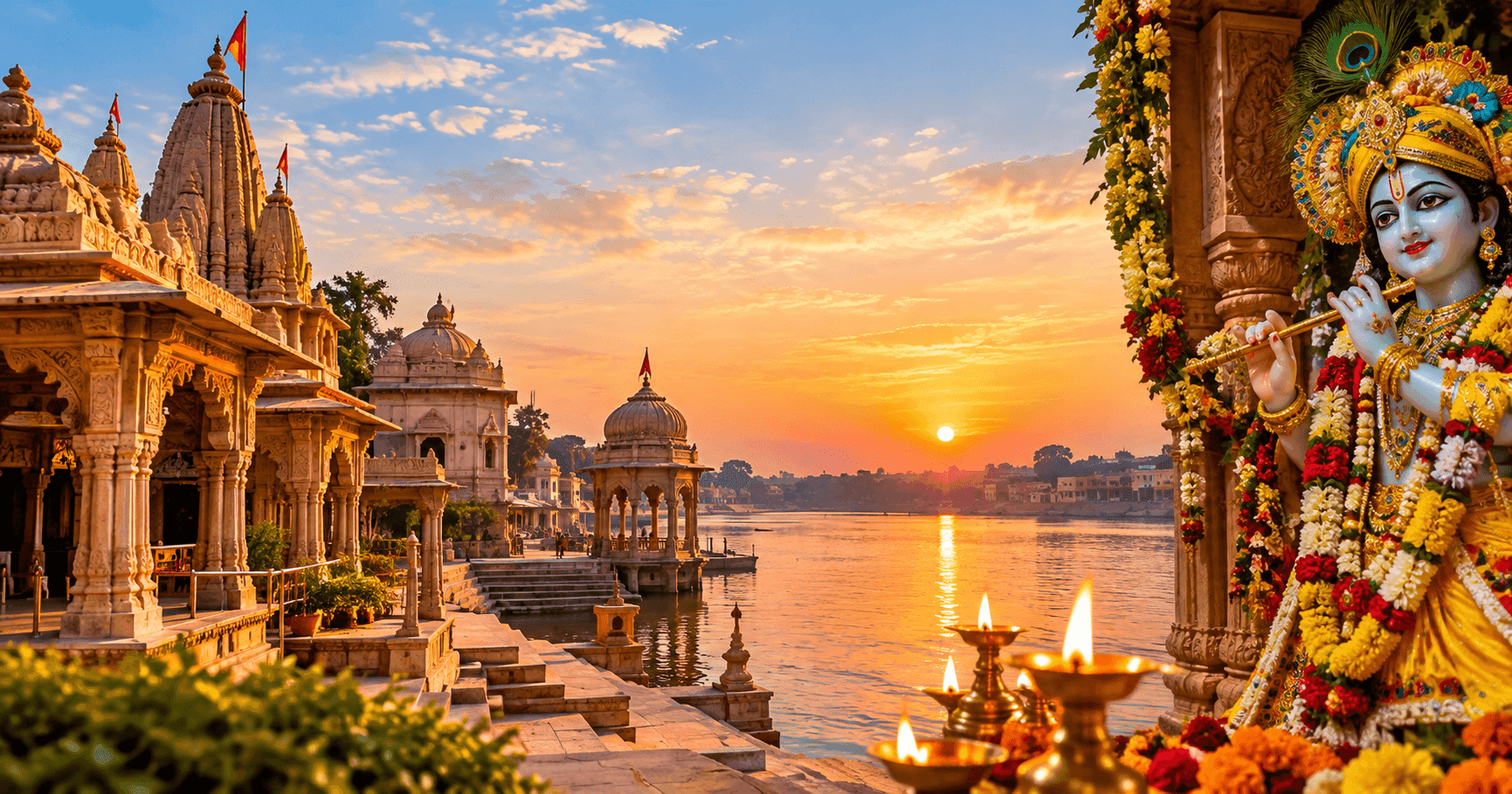
Explore Mathura's famous temples, sacred ghats and Vrindavan attractions with this travel guide. Discover itinerary tips and plan a comfortable stay at Skywings Sarovar Portico, Mathura, with Sarovar Hotels.
Mathura is one of India's most important pilgrimage destinations and is traditionally regarded as the birthplace of Lord Krishna. Located on the banks of the Yamuna River in Uttar Pradesh, the city is the heart of the Braj region, where ancient temples, sacred ghats, historic markets and religious traditions remain closely connected with everyday life.
For many visitors, a trip to Mathura extends beyond a single temple. The pilgrimage often includes Vrindavan and, depending on the time available, nearby destinations such as Govardhan, Gokul and Barsana. From seeking blessings at Shri Krishna Janmabhoomi to attending the evening Aarti at Vishram Ghat, the region offers a memorable combination of spirituality, history and local culture.
This guide covers the most important Mathura temples, religious sites in Vrindavan, nearby attractions, a practical two-day itinerary, travel tips and accommodation options to help you plan your visit.
Mathura has numerous temples and smaller shrines, so trying to cover every site in one trip can make your itinerary unnecessarily rushed. If you are visiting for the first time, prioritise these important religious places.
Shri Krishna Janmabhoomi is the most important starting point for many Mathura pilgrims. The site is traditionally regarded as the birthplace of Lord Krishna, where he is believed to have been born to Devaki and Vasudeva while they were imprisoned by Kansa.
The complex includes the Keshav Dev Temple and the area traditionally identified as Krishna's birthplace. It is an active religious site and an important part of Mathura's history and identity.
Security arrangements are strict, and certain belongings may not be permitted inside. Check the latest entry rules and locker arrangements before visiting, particularly during major festivals.
Located in the old city near Vishram Ghat, Dwarkadhish Temple is dedicated to Lord Krishna in his form as Dwarkadhish, or the Lord of Dwarka.
The temple dates to the early 19th century and is known for its colourful architecture and devotional traditions. It is also associated with Jhulan Yatra, when the deity is placed on a decorated swing during the monsoon season.
Its location makes it convenient to combine a visit with Vishram Ghat and the surrounding old-city lanes.
Gita Mandir, also known as Birla Mandir, stands along the Mathura–Vrindavan road. The temple is known for its inscriptions of the Bhagavad Gita and its relatively peaceful surroundings.
It is a worthwhile stop if you want to include a quieter temple in your itinerary after exploring the busier areas of central Mathura.
Mathura's religious heritage is not limited to Krishna worship. Bhuteshwar Mahadev Temple is dedicated to Lord Shiva and is traditionally regarded as one of the city's guardian shrines.
Include this temple in your pilgrimage if you want to explore Mathura's wider religious traditions rather than focusing exclusively on Krishna temples.
Chamunda Devi Temple is another important shrine in Mathura, dedicated to Goddess Chamunda. It attracts devotees throughout the year and holds particular significance during major Hindu festivals.
You can add this temple to your itinerary if you have additional time to explore the city's religious heritage.
Although Vishram Ghat is a riverside ghat rather than a temple, it is one of the most important religious places to include in a Mathura visit.
According to local tradition, Lord Krishna rested here after defeating Kansa. Today, the ghat is surrounded by smaller shrines and remains an important place for prayers and rituals along the Yamuna River.
The evening Yamuna Aarti is a highlight for many visitors. As lamps are offered beside the river, devotional chants and bells create a distinctive spiritual atmosphere.
If you plan to attend the Aarti, check the day's schedule locally and arrive early. The ghat can become crowded on weekends, during festivals and on other important religious occasions.
A trip to Mathura is often combined with Vrindavan, another major pilgrimage destination in the Braj region. While Mathura is traditionally associated with Krishna's birth, Vrindavan is closely connected with stories of his childhood and youth.
If you have two or more days, adding Vrindavan can give you a more complete experience of the region. Staying at a convenient hotel in Mathura can also help you plan visits to both destinations.
Banke Bihari Temple is among Vrindavan's most famous Krishna temples and attracts large numbers of devotees.
The temple is known for its distinctive worship traditions and the close involvement of devotees in darshan. Crowds can become particularly heavy during weekends and festivals, so allow sufficient time for your visit.
Radha Raman Temple is one of Vrindavan's historic temples and is associated with the Gaudiya Vaishnava tradition.
Its location in the older part of Vrindavan makes it a worthwhile addition to a temple walk through the town's historic lanes.
The Sri Sri Krishna Balaram Mandir, commonly known as ISKCON Vrindavan, offers a different atmosphere from the older temples in the town.
The temple is known for devotional chanting and its international congregation. It is a useful stop for visitors interested in experiencing contemporary Krishna devotional traditions alongside Vrindavan's historic temples.
Prem Mandir is a modern white-marble temple complex known for its detailed carvings and landscaped grounds.
The temple is especially popular in the evening when the complex is illuminated. Check current visitor timings if you want to include the evening experience in your itinerary.
Nidhivan is a sacred grove associated with local religious traditions and stories surrounding Krishna and Radha.
Visitors should follow the site's rules and respect local customs. It is best included as part of a wider Vrindavan itinerary rather than treated as a standalone sightseeing stop.
Mathura is worth exploring beyond its shrines. Adding a few historical and cultural attractions can give you a better understanding of the city's past.
The Government Museum in Dampier Nagar is particularly interesting for visitors who want to explore Mathura's artistic and archaeological heritage.
The museum houses sculptures and other artefacts associated with the Mathura School of Art and different periods of Indian history. It also offers a useful change of pace after several temple visits.
Check the latest opening hours before planning your visit.
Kans Qila is a historic fort traditionally associated with King Kansa. The surviving structure reflects different periods of Mathura's history and stands close to the Yamuna River.
Check current access arrangements before including it in your itinerary, as heritage sites may have visitor restrictions.
Govardhan is one of the most important pilgrimage destinations around Mathura. It is traditionally associated with the story of Lord Krishna lifting Govardhan Hill to protect the people of Braj.
The Govardhan Parikrama is approximately 21 km long and is undertaken by pilgrims throughout the year. You do not need to complete the entire route to visit Govardhan, but if you plan to undertake the full Parikrama, allow sufficient time and carry water.
If you have more time, Gokul and Barsana can be added to your Braj itinerary.
Gokul is associated with Krishna's childhood, while Barsana is traditionally associated with Radha and is home to Shri Radha Rani Temple. Both destinations are better treated as separate excursions rather than squeezed into an already busy two-day itinerary.
A two-day trip works well for the major temples in Mathura and Vrindavan. Three or more days allow you to explore the wider Braj region at a more relaxed pace.
Morning: Start at Shri Krishna Janmabhoomi. Arriving early can make it easier to manage security checks and crowds.
Late Morning: Continue to Bhuteshwar Mahadev Temple before exploring the surrounding old-city area.
Afternoon: Visit Gita Mandir or the Government Museum, depending on your interests and the day's opening arrangements.
Late Afternoon: Head towards Dwarkadhish Temple during its available darshan period.
Evening: Walk to Vishram Ghat and attend the Yamuna Aarti if it is scheduled. Allow extra time for crowds around the riverfront.
Early Morning: Travel to Vrindavan and begin with Banke Bihari Temple.
Late Morning: Continue to Radha Raman Temple and explore the surrounding historic lanes.
Afternoon: Visit ISKCON Vrindavan and take a break before continuing your sightseeing.
Evening: Visit Prem Mandir and spend time around the illuminated complex.
If you have a third day, choose one destination such as Govardhan, Gokul or Barsana instead of trying to cover all three.
Planning your accommodation in advance can make this itinerary easier to manage. Sarovar Hotels offers a stay option in Mathura at Skywings Sarovar Portico, which you can consider when organising your temple visits and nearby excursions.
The cooler months from October to March are generally more comfortable for walking between temples, exploring the old city and spending time at the Yamuna ghats.
However, the best time depends on the experience you want.
Janmashtami is one of the most important celebrations in Mathura and attracts large crowds. Holi is another major festival across the Braj region, particularly around Mathura, Vrindavan and Barsana.
These festivals can be memorable if you want to experience Mathura at its most vibrant, but they also bring heavy crowds, traffic restrictions and changes to normal temple arrangements.
For a quieter pilgrimage, consider travelling outside major festival periods and booking your accommodation ahead of time.
A little preparation can make your pilgrimage easier, particularly if you plan to visit several temples in one day.
Check Temple Rules: Entry arrangements, darshan schedules, restricted items and photography rules differ between temples.
Start Early: Morning visits can help you avoid some of the busiest periods at popular shrines.
Dress Respectfully: Wear comfortable clothing appropriate for religious sites and follow any specific temple requirements.
Secure Your Belongings: Keep phones, wallets and other valuables secure in crowded temple lanes and markets.
Be Careful Around Monkeys: Monkeys are common in parts of Mathura and Vrindavan. Avoid feeding them and keep food, glasses and loose belongings secure.
Carry Water: You may spend several hours walking between temples, markets and ghats.
Wear Easy-to-Remove Footwear: Shoes need to be removed at many religious sites.
Allow Extra Travel Time: Traffic and pedestrian crowds can make journeys between Mathura and Vrindavan slower than expected.
Check Festival Arrangements: Temple access and local traffic can change significantly during Janmashtami, Holi and other major occasions.
Plan Your Stay: Choose accommodation based on your itinerary, transport requirements and the number of days you intend to spend exploring the region.
Mathura is well connected to Delhi, Agra and other major cities, making it relatively easy to include in a North India itinerary.
By Air: Agra's Kheria Airport is one option for air travellers. Delhi's Indira Gandhi International Airport is another option, particularly if you are combining Mathura with a Delhi trip.
By Rail: Mathura Junction is a major railway station with connections to several cities across India. Mathura Cantt also serves the area.
By Road: Mathura is connected by road with Delhi, Agra and other cities in Uttar Pradesh. The Yamuna Expressway provides a convenient road connection from Delhi-NCR, although journey times vary with traffic and your starting point.
Once you arrive, plan your local transport around the temples you want to visit. Traffic and pedestrian restrictions may affect access to popular religious sites during festivals.
Choosing the right hotel in Mathura can make it easier to combine temple visits in the city with trips to Vrindavan and other parts of the Braj region.
Skywings Sarovar Portico, Mathura, part of Sarovar Hotels, is an accommodation option for travellers visiting the city's religious and cultural attractions.
Located at Skywings Tower, Plot No. 225/18, Sonkh Road, Radhika Vihar, Mathura, Uttar Pradesh 281001, the hotel offers 70 well-appointed rooms, all-day dining at Flavours, Chill Bar, parking and banquet facilities.
Its location can work well for travellers looking for a base in Mathura while planning road trips towards Vrindavan and other nearby pilgrimage destinations. The hotel also provides dining options for guests who prefer to enjoy meals at the property after a day of sightseeing.
When choosing your accommodation, consider the location, room type, dining facilities and transport arrangements based on your itinerary. Check the latest availability, rates and booking terms before confirming your stay.
Plan your stay with Sarovar Hotels. Contact Skywings Sarovar Portico, Mathura, to enquire about room availability and reservations.
Phone: +91 56 5490 0100
Email: spmt@sarovarhotels.com
Hotel details: https://www.sarovarhotels.com/skywings-sarovar-portico-mathura/