
Loading…
Loading…

Plan your Ayodhya trip with this complete guide to the best things to do, including Ram Mandir, Hanuman Garhi, Kanak Bhawan, Saryu Aarti, historic ghats, local markets and practical travel tips for first-time visitors.
Ayodhya is a historic city in Uttar Pradesh with deep religious and cultural significance. Located along the banks of the River Saryu, the city is known for its temples, ghats, spiritual traditions and connections with the Ramayana.
For first-time visitors, knowing the things to do in Ayodhya can make it easier to plan a meaningful trip without trying to cover every attraction at once. From visiting Shri Ram Janmabhoomi and historic temples to attending the evening aarti and exploring the Saryu riverfront, Ayodhya offers a mix of spiritual, cultural and sightseeing experiences.
Whether you are visiting for a pilgrimage, a family holiday or a cultural journey, this guide covers some of the most important Ayodhya tourist places to include in your itinerary.
Ayodhya is one of India's important religious destinations and is traditionally associated with Lord Rama. The city has developed into a major pilgrimage destination while retaining its historic temples, traditional markets and riverfront experiences.
Beyond temple visits, travellers can explore the city's architecture, attend spiritual ceremonies, discover local food and spend time along the Saryu River.
Planning your accommodation in advance can also make your Ayodhya trip more convenient, especially during busy pilgrimage seasons. When comparing hotels in Ayodhya, consider factors such as location, accessibility to major temples, room comfort, dining facilities and transportation options.
For first-time visitors, combining the major religious landmarks with quieter cultural experiences can make the trip more balanced and enjoyable.
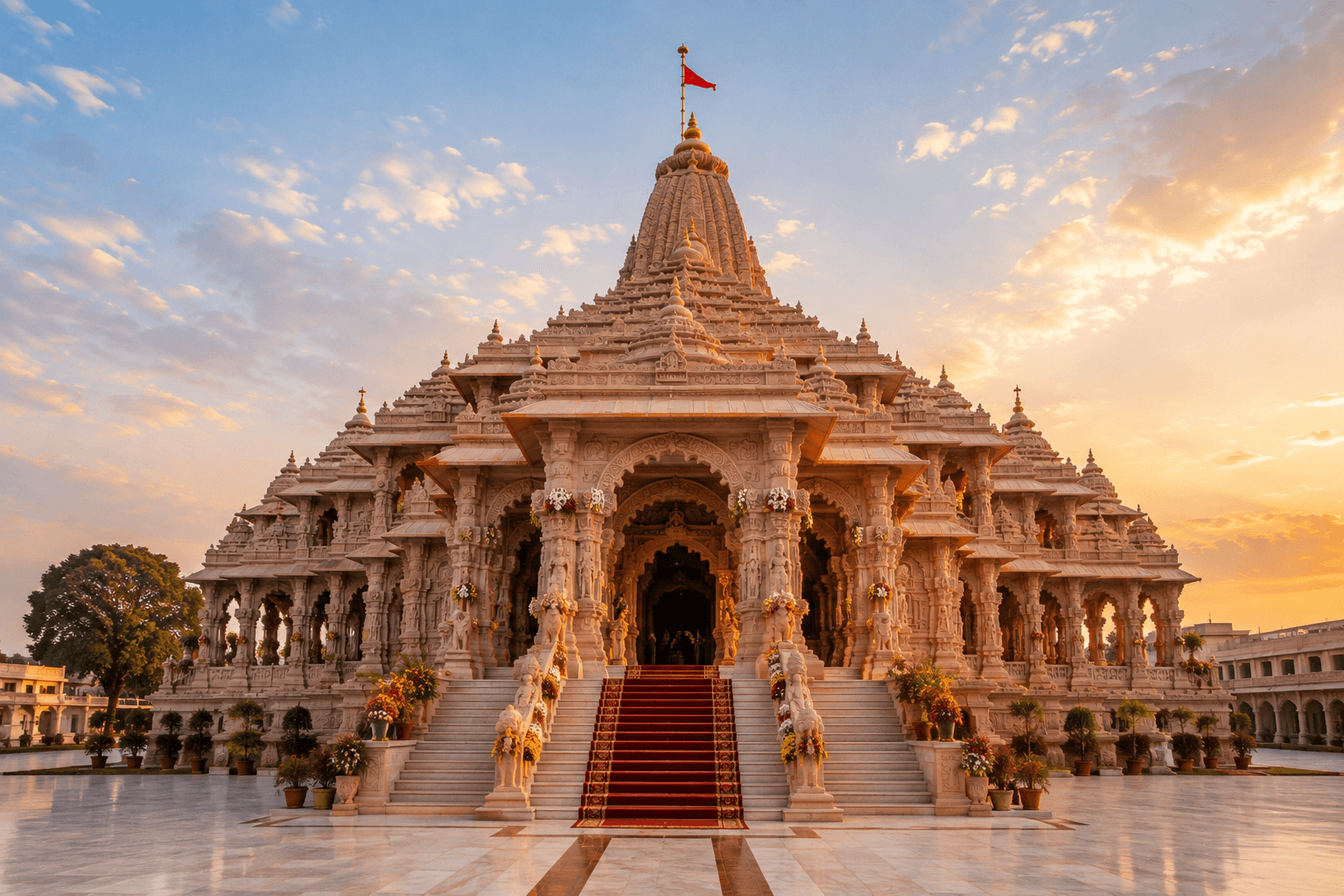
A visit to Shri Ram Janmabhoomi is one of the most significant things to do in Ayodhya. The site is associated with the traditional birthplace of Lord Rama and is now home to the Ram Mandir.
The temple complex has become a major pilgrimage destination, attracting visitors from across India and around the world.
Visitors should check the latest official entry guidelines, timings and security requirements before planning their visit, as procedures can change.
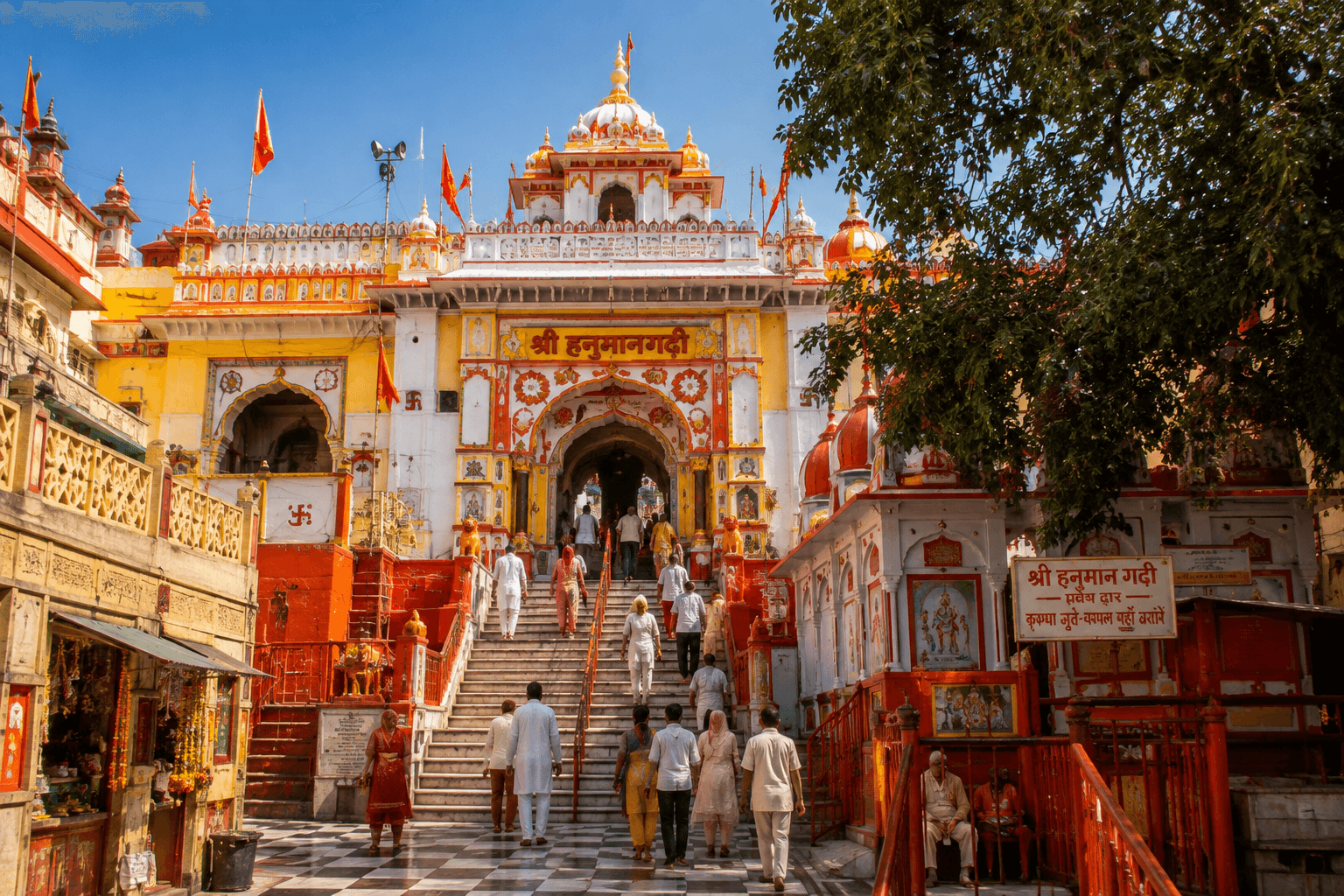
Hanuman Garhi is one of the well-known temples in Ayodhya and is traditionally dedicated to Lord Hanuman.
The temple is located within the city and is reached by a flight of steps. The shrine has strong religious significance for devotees and is often included in pilgrimage itineraries along with Ram Janmabhoomi.
For first-time visitors, it can be useful to visit during the cooler parts of the day, particularly if you plan to explore several temples on foot.
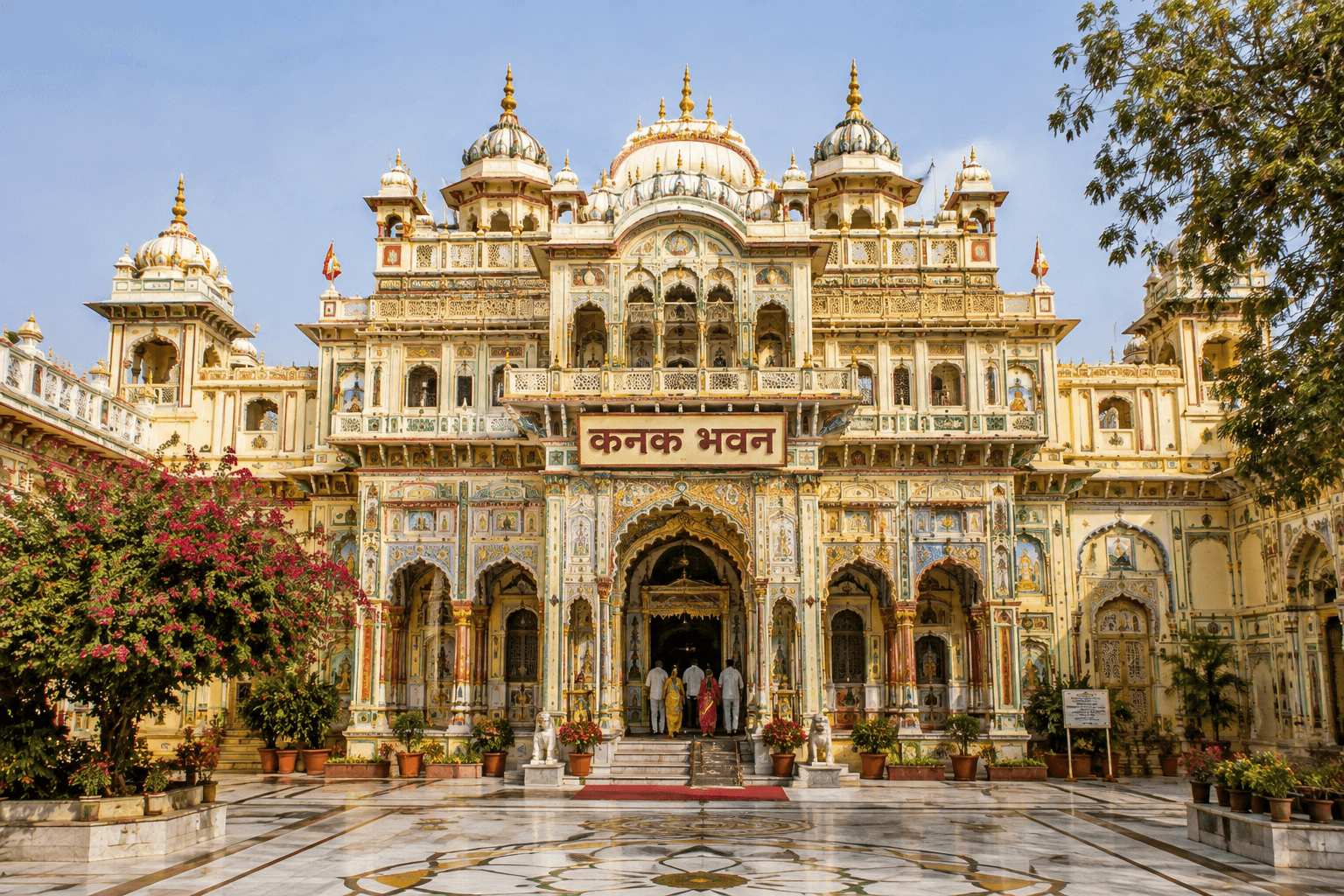
Located near the Ram Janmabhoomi area, Kanak Bhawan is another important temple to include in an Ayodhya sightseeing itinerary.
The temple is known for its distinctive architecture and beautifully decorated idols of Lord Rama and Goddess Sita.
The peaceful atmosphere makes it a worthwhile stop for visitors looking to experience Ayodhya beyond its larger and busier pilgrimage sites.
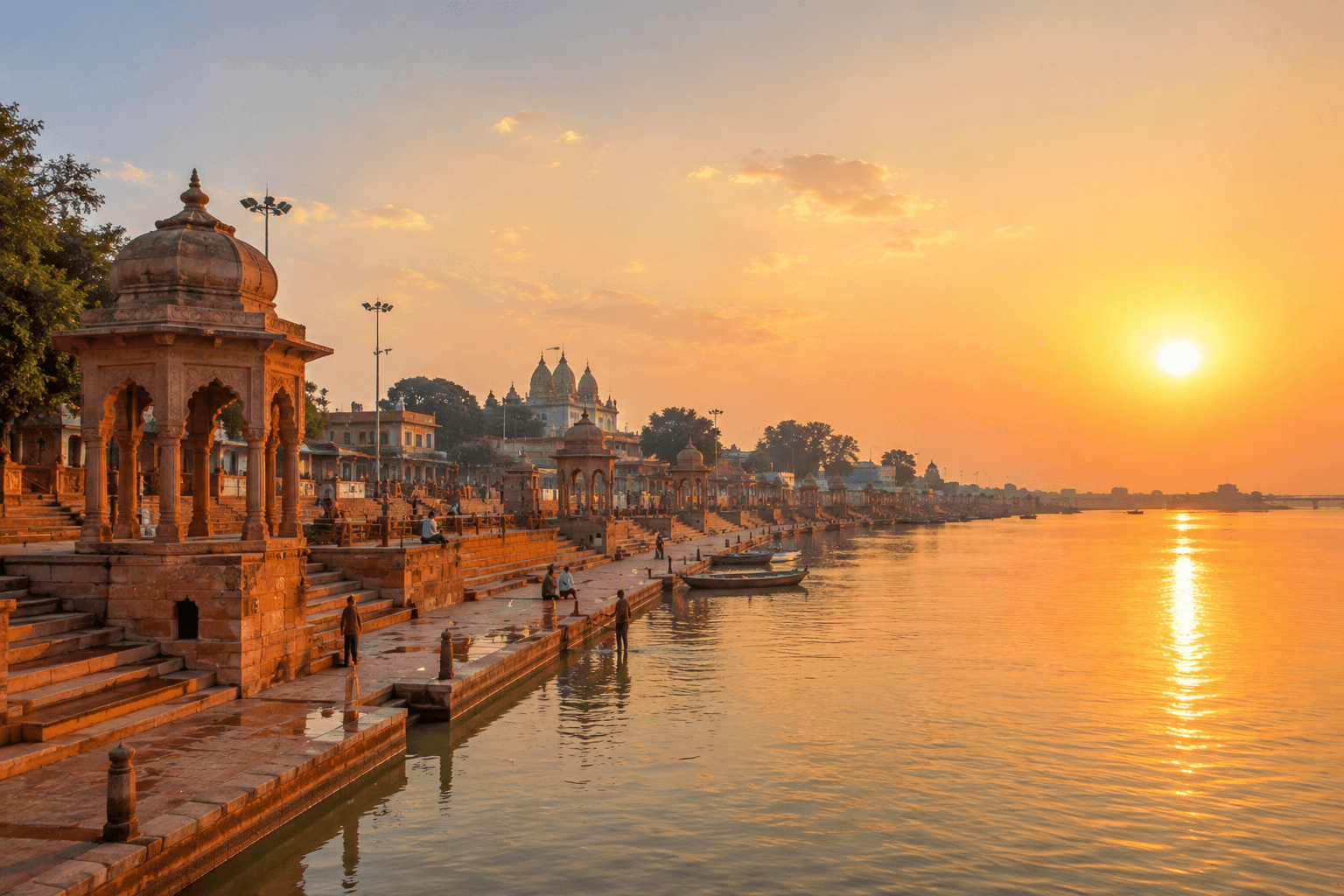
Spending time along the Saryu River is one of the more relaxing things to do in Ayodhya.
The riverfront provides an opportunity to take a break from temple visits and experience the city's spiritual atmosphere. Visitors can walk along the ghats, observe local rituals and enjoy views of the river.
The area becomes particularly atmospheric around sunset when visitors gather for evening prayers and aarti.
The Saryu Aarti is one of the memorable experiences for visitors to Ayodhya.
As lamps are offered during the ceremony and devotional chants fill the riverfront, the atmosphere becomes especially vibrant. Visitors interested in photography can also capture the illuminated ghats and reflections on the river.
If you plan to attend, arrive early enough to find a suitable viewing position and follow local instructions around the ceremony.
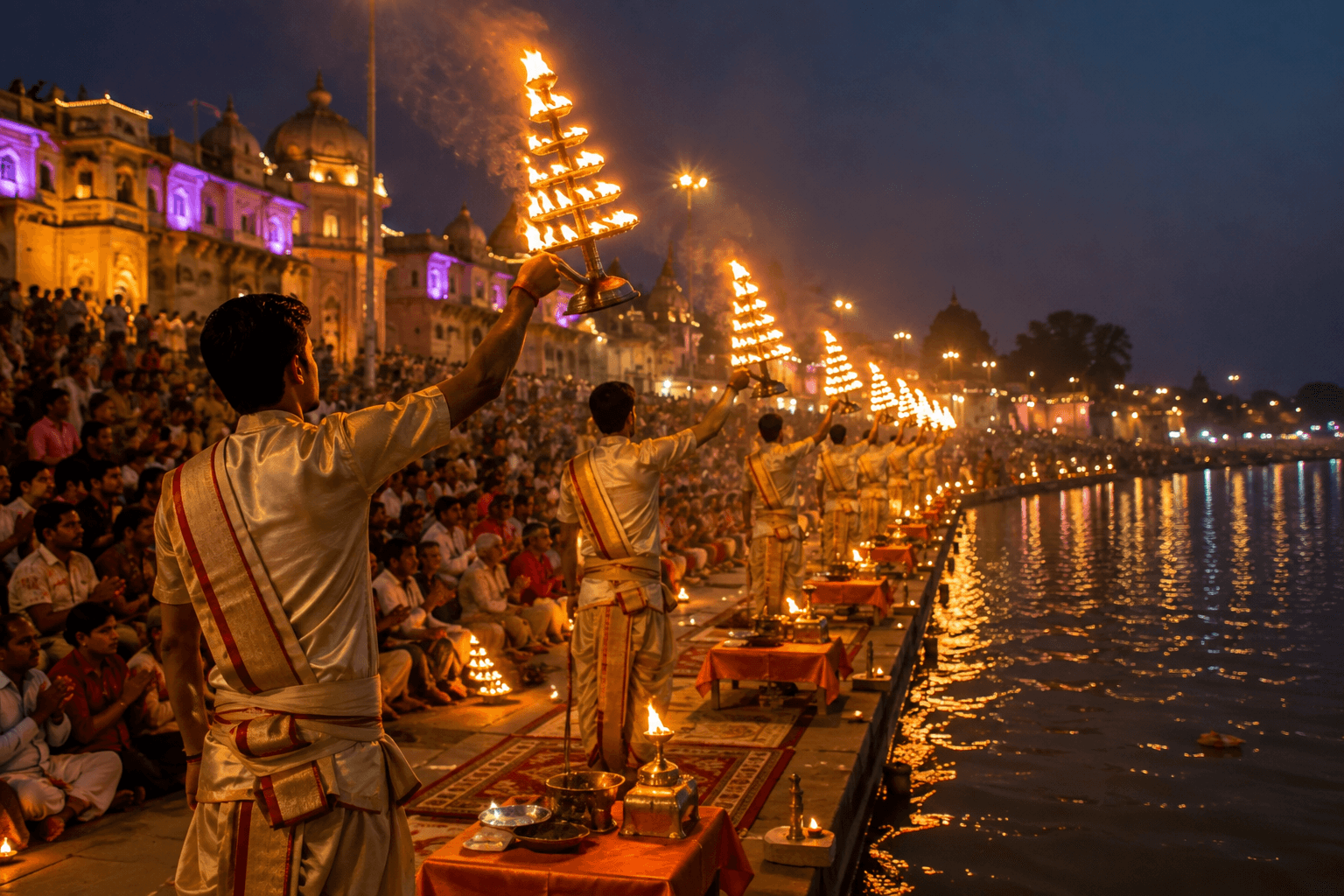
Nageshwar Nath Temple is another prominent religious site in Ayodhya and is traditionally associated with Lord Shiva.
The temple is located close to the Saryu ghats, making it convenient to include alongside a riverfront visit.
Its religious significance and location make it an interesting addition to an itinerary focused on Ayodhya famous places.
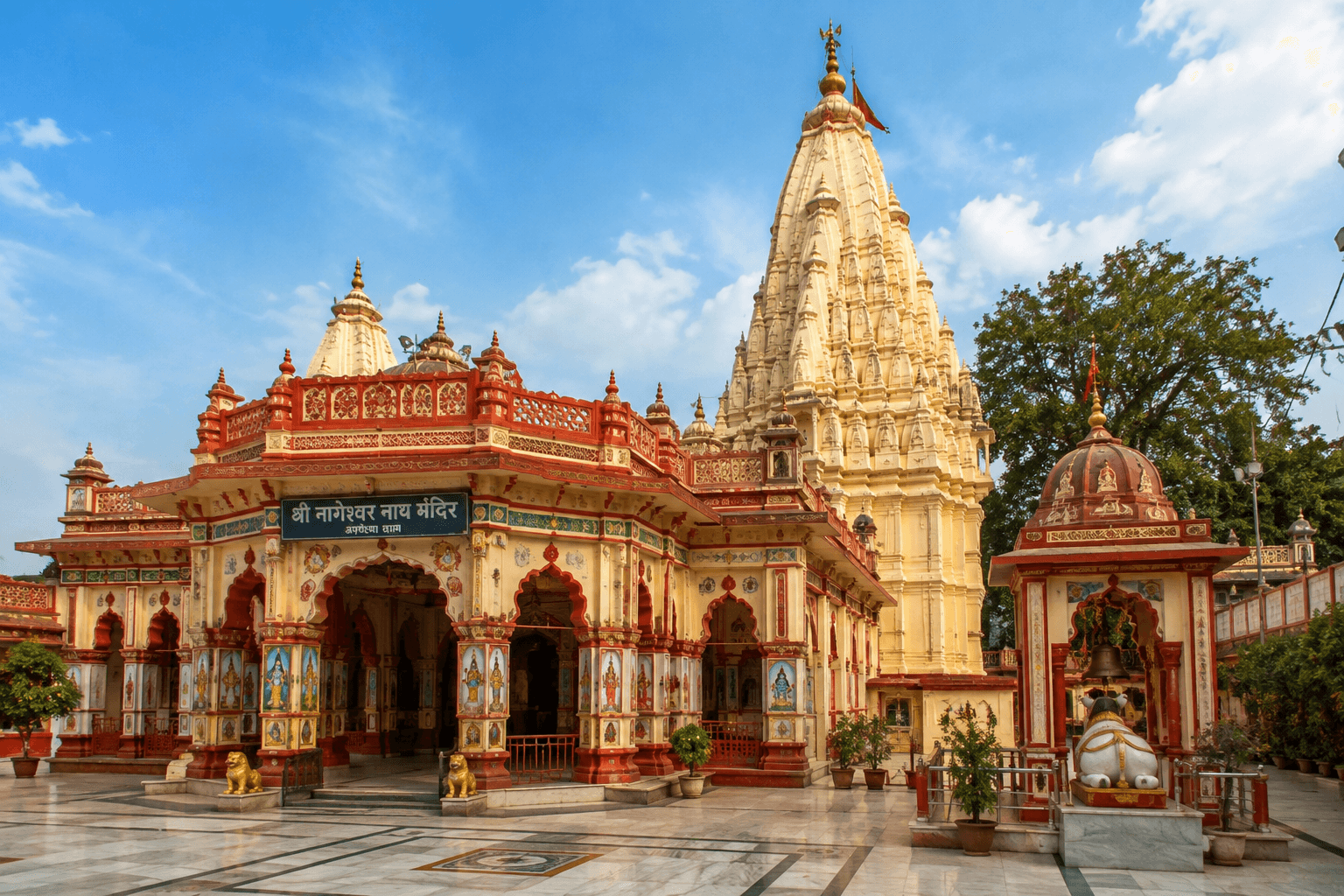
Treta Ke Thakur is traditionally associated with Lord Rama and is known for its religious significance and historic character.
The temple is located near the Naya Ghat area and can be included when exploring Ayodhya's temples and riverfront.
Visitors interested in the city's religious traditions can include this site along with other important temples during their sightseeing schedule.
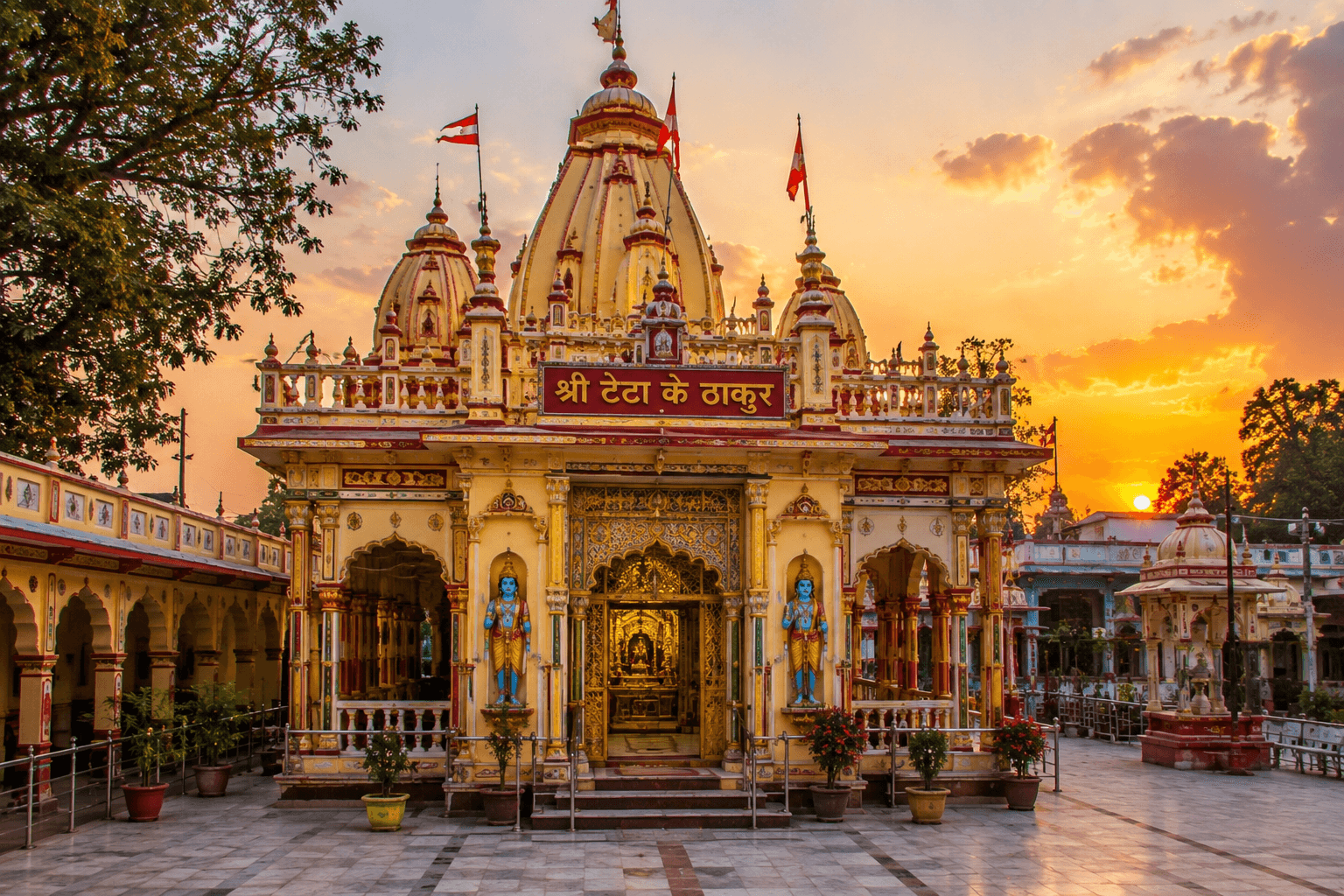
Located along the Saryu River, Guptar Ghat is associated with traditional accounts of Lord Rama's departure from the earthly realm.
The ghat offers a quieter experience compared with some of the more crowded central pilgrimage areas.
It can be particularly appealing to travellers who want to spend some peaceful time near the river while exploring the spiritual heritage of Ayodhya.
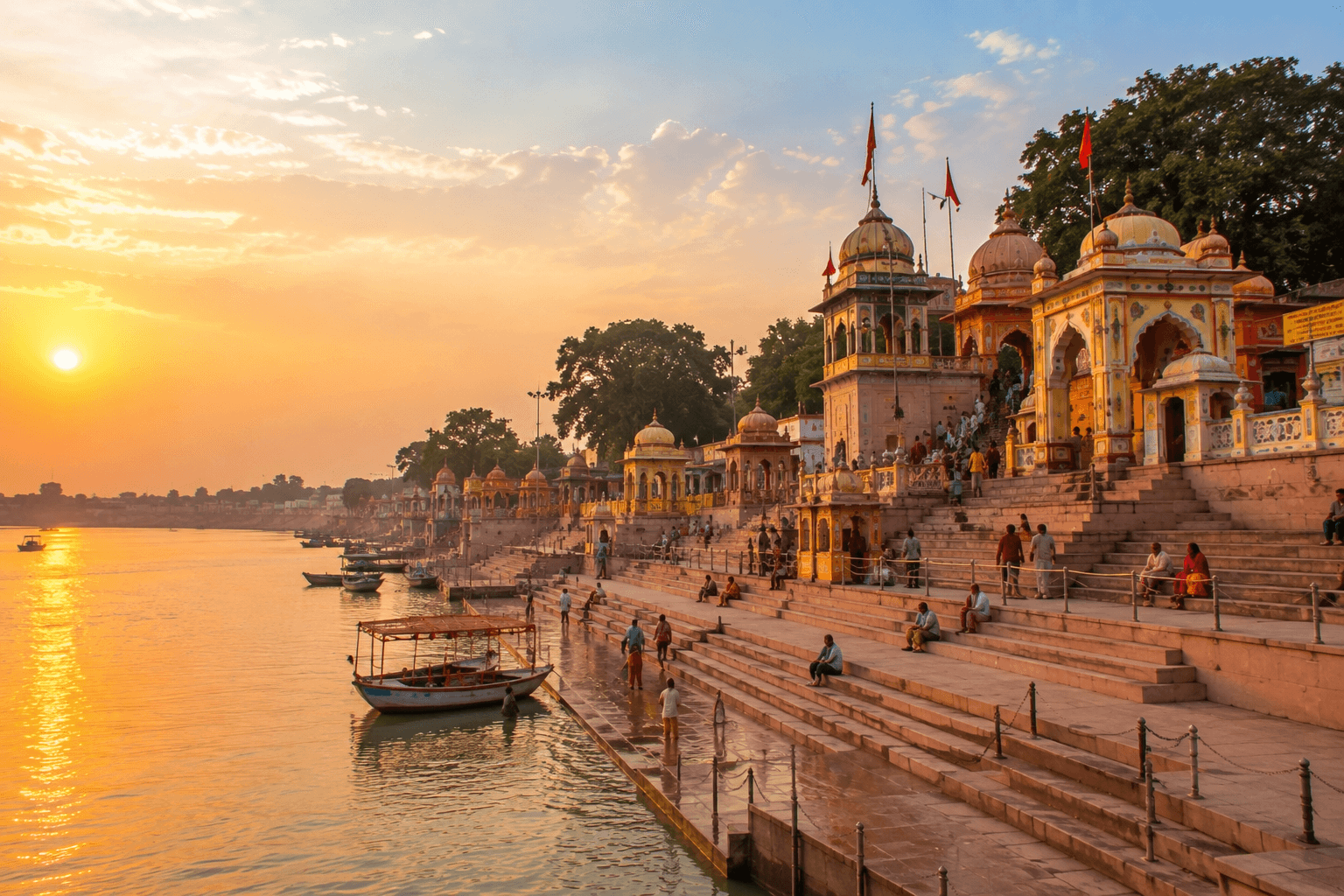
Ayodhya's markets offer a different way to experience the city. Around the major temples and older parts of the city, visitors can find religious souvenirs, devotional items, handicrafts and locally popular food products.
Shopping does not have to be limited to souvenirs. Walking through the markets can also provide an opportunity to observe local life and understand how pilgrimage influences the city's everyday economy.
When shopping, compare prices and check product quality before making purchases.
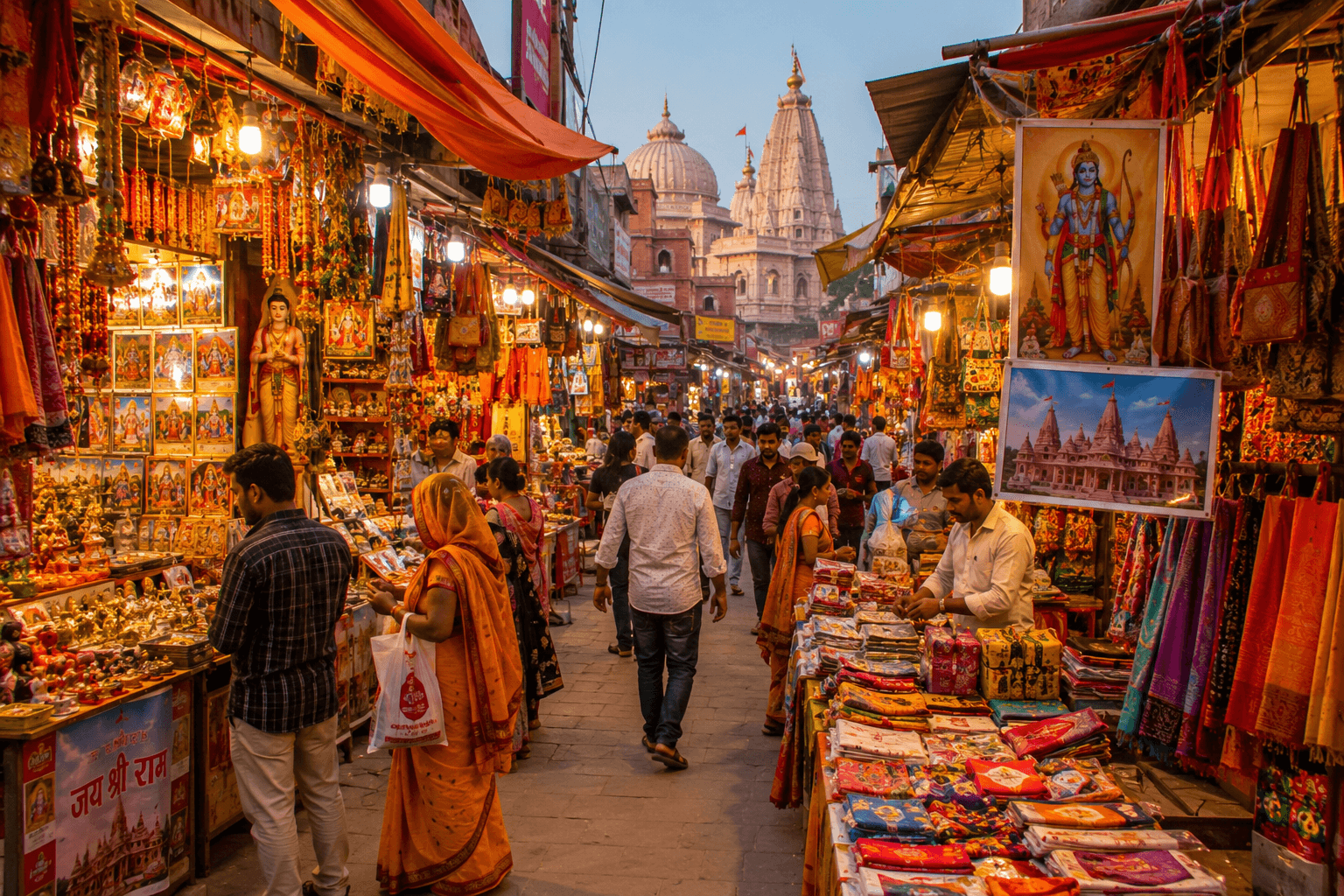
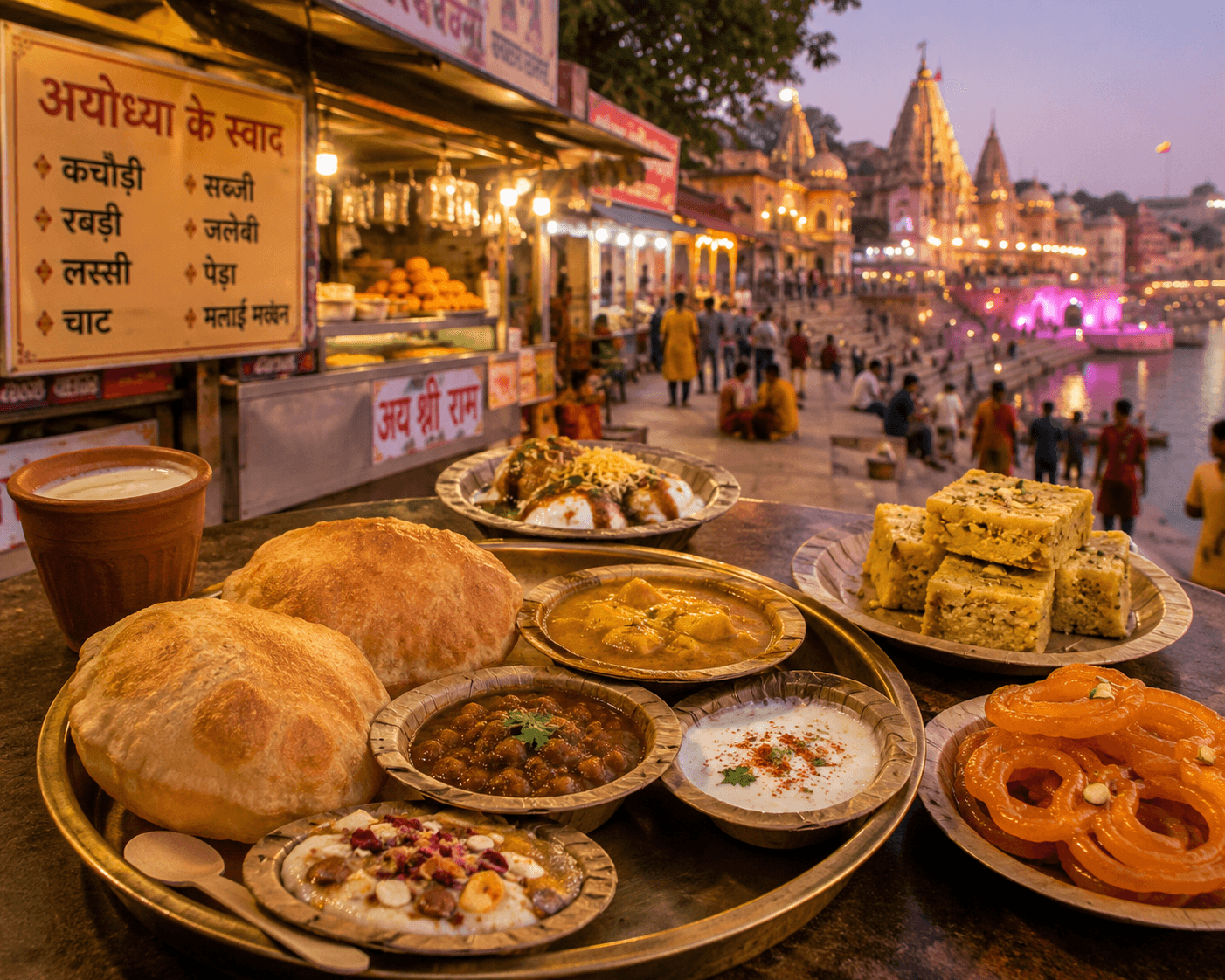
Food is another part of experiencing a destination. Ayodhya offers a range of vegetarian food options, including traditional North Indian preparations and local snacks.
Visitors can explore simple local eateries as well as restaurants near their accommodation.
If you are travelling with family or elderly members, choose dining establishments that offer comfortable seating and clean food preparation facilities.
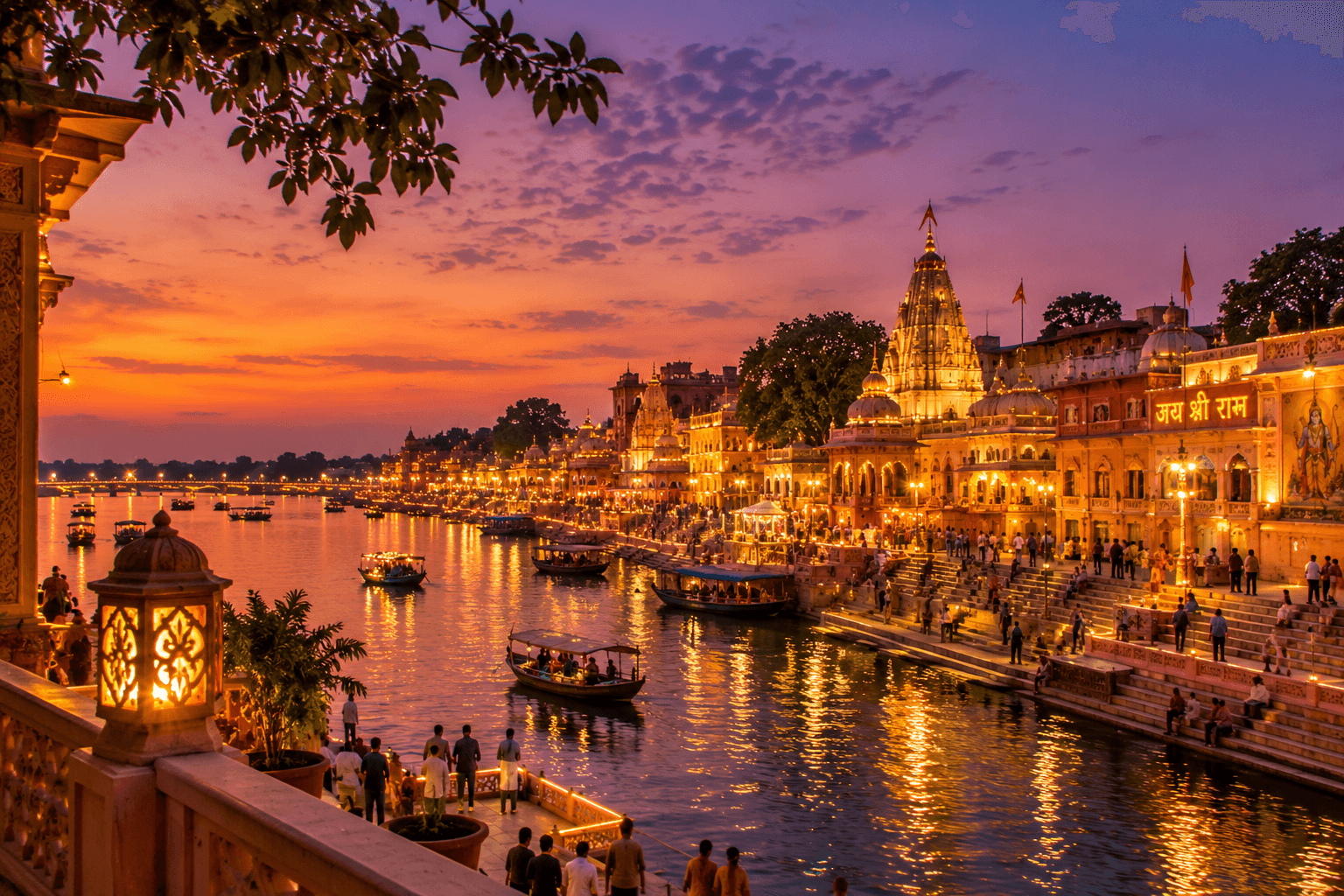
Ayodhya can have a completely different atmosphere after sunset. The illuminated temples, riverfront and ghats create a visually appealing environment.
Evening walks around the Saryu riverfront can be a pleasant addition to a temple-focused itinerary.
However, travellers should remain aware of crowds and follow local safety instructions, especially around busy pilgrimage areas.
Ayodhya's heritage extends beyond its most famous temples. Travellers interested in history can explore additional temples, ghats and traditional neighbourhoods across the city.
Taking time to understand the stories and traditions connected with these sites can make sightseeing more meaningful.
Instead of rushing through a long list of attractions, consider selecting a few locations that match your interests.
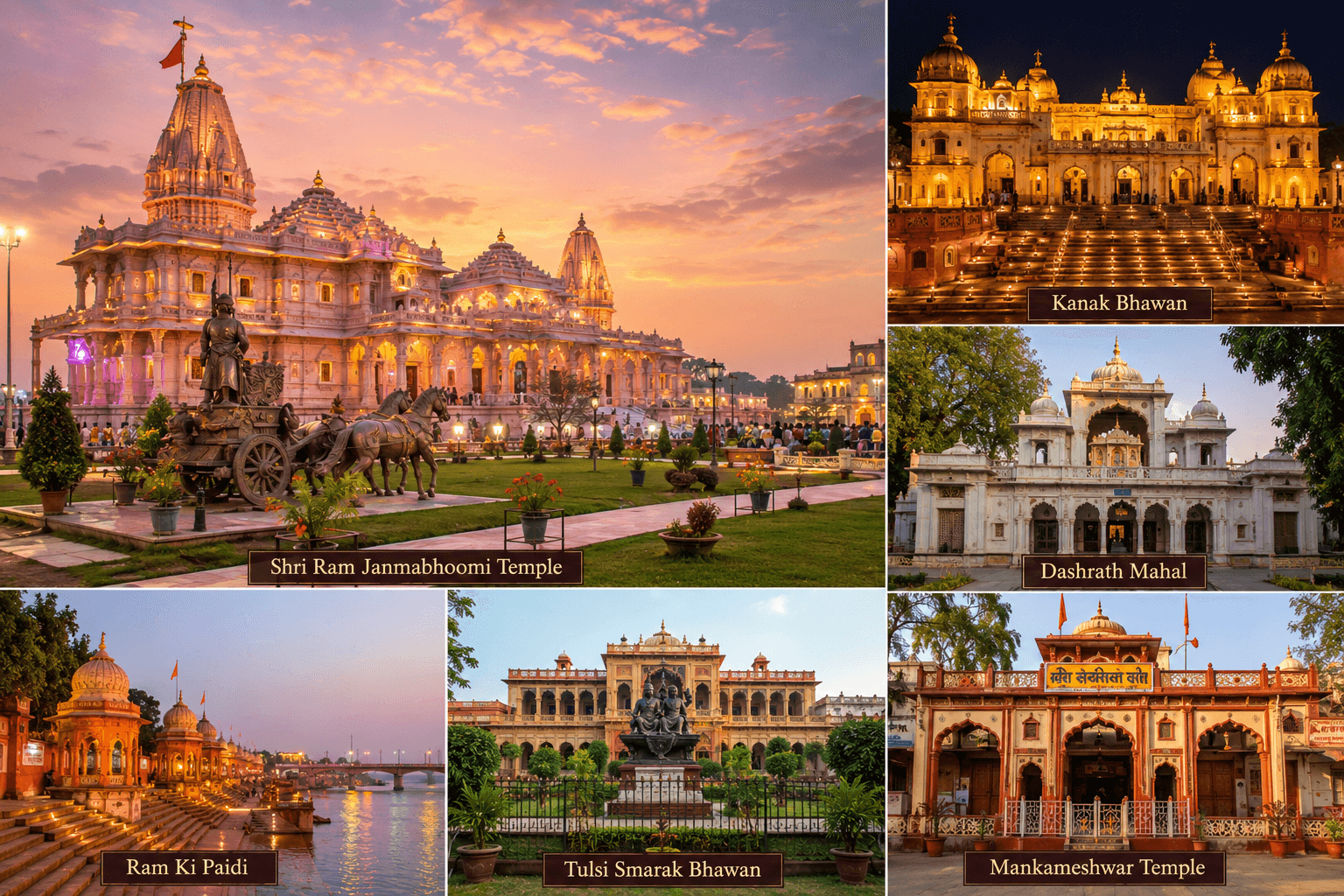
If you have only one day, start early with Shri Ram Janmabhoomi and Hanuman Garhi. Continue to Kanak Bhawan and other nearby temples before taking a break for lunch.
In the afternoon, explore Nageshwar Nath Temple and spend some time around the Saryu riverfront. Finish your day by attending the evening aarti.
A one-day itinerary should focus on locations that are relatively close together so you do not spend most of the day travelling.
If you are visiting Ayodhya for just one day, choosing one of the conveniently located hotels in Ayodhya can help reduce travel time between your accommodation and the city's major attractions. This can be particularly useful for travellers who want to begin sightseeing early and attend the evening aarti.
A two-day trip allows you to explore Ayodhya at a more relaxed pace.
Use the first day for the major temples and pilgrimage sites, including Shri Ram Janmabhoomi, Hanuman Garhi and Kanak Bhawan. In the evening, experience the Saryu Aarti.
Use the second day to explore additional temples, ghats, local markets and cultural experiences. You can also spend more time along the Saryu River instead of trying to add too many attractions.
For travellers looking for a comfortable stay while exploring the city's religious and cultural attractions, Sarovar Hotels offers an accommodation option in Ayodhya. Park Inn by Radisson Ayodhya provides facilities for both leisure and pilgrimage travellers, making it possible to relax between sightseeing visits.
The property offers comfortable rooms, dining options and leisure facilities, giving visitors a convenient base while exploring Ayodhya. When planning your stay, consider your sightseeing schedule and the distance between the hotel and the attractions you want to visit.
Choosing accommodation that fits your itinerary can make a short pilgrimage or sightseeing trip more convenient, particularly when you want to balance temple visits with time for rest.
Choosing the right accommodation can make a pilgrimage or sightseeing trip considerably more comfortable. Travellers comparing hotels in Ayodhya should consider location, accessibility to major attractions, room comfort, dining facilities and transportation options.
For visitors looking for a comfortable base, Park Inn by Radisson Ayodhya is an accommodation option listed by Sarovar Hotels. The property offers rooms, dining options and leisure facilities for travellers visiting the city.
The choice of accommodation can also depend on the duration of your trip. Travellers staying for two or more days may prefer hotels in Ayodhya that offer comfortable rooms, dining facilities and convenient access to different parts of the city. This allows you to explore temples and ghats at a relaxed pace.
Whether you are travelling with family, visiting for pilgrimage or exploring Ayodhya as a cultural destination, selecting suitable hotels in Ayodhya can make your overall experience more comfortable. Consider your itinerary, preferred facilities and location before making a booking.
The most comfortable time for sightseeing generally depends on weather conditions and your tolerance for heat.
The cooler months can be more comfortable for visiting temples, walking through markets and spending time around the ghats. Festival periods can bring a particularly vibrant atmosphere but may also mean larger crowds and higher demand for accommodation.
If you are travelling during a major religious occasion, plan accommodation and transportation well in advance.
Wear comfortable footwear because many sightseeing areas involve walking and some temple visits may require standing in queues.
Dress respectfully when visiting religious sites and follow the rules regarding photography, footwear and personal belongings.
Keep drinking water with you, particularly during warmer months. If travelling with elderly family members or children, allow enough rest time between attractions.
It is also advisable to check the latest temple timings, entry procedures and local travel advisories before your visit.
Ayodhya offers much more than a list of temples. Its spiritual atmosphere, historic sites, Saryu riverfront, traditional markets and cultural experiences make it a destination worth exploring at a comfortable pace.
From Shri Ram Janmabhoomi and Hanuman Garhi to Kanak Bhawan, Saryu Aarti and Guptar Ghat, there are plenty of things to do in Ayodhya for first-time visitors. Planning your itinerary around location and opening times can help you experience the city without feeling rushed.
Whether you are visiting Ayodhya for pilgrimage, family travel or cultural exploration, give yourself enough time to appreciate both its major landmarks and quieter experiences. Choosing accommodation that suits your itinerary can further add to a comfortable and memorable trip.
Make your Ayodhya trip more comfortable with a stay that fits your sightseeing plans and gives you a relaxing place to return to after exploring the city's temples, ghats and cultural attractions.
For reservations and enquiries with Sarovar Hotels:
📞 Call: +91 98 8680 0049
📧 Email: reservation@sarovarhotels.com
Plan your Ayodhya getaway and experience the city's spiritual heritage, historic landmarks and vibrant culture.
Ayodhya is a historic city in Uttar Pradesh with deep religious and cultural significance. Located along the banks of the River Saryu, the city is known for its temples, ghats, spiritual traditions and connections with the Ramayana.
For first-time visitors, knowing the things to do in Ayodhya can make it easier to plan a meaningful trip without trying to cover every attraction at once. From visiting Shri Ram Janmabhoomi and historic temples to attending the evening aarti and exploring the Saryu riverfront, Ayodhya offers a mix of spiritual, cultural and sightseeing experiences.
Whether you are visiting for a pilgrimage, a family holiday or a cultural journey, this guide covers some of the most important Ayodhya tourist places to include in your itinerary.
Ayodhya is one of India's important religious destinations and is traditionally associated with Lord Rama. The city has developed into a major pilgrimage destination while retaining its historic temples, traditional markets and riverfront experiences.
Beyond temple visits, travellers can explore the city's architecture, attend spiritual ceremonies, discover local food and spend time along the Saryu River.
Planning your accommodation in advance can also make your Ayodhya trip more convenient, especially during busy pilgrimage seasons. When comparing hotels in Ayodhya, consider factors such as location, accessibility to major temples, room comfort, dining facilities and transportation options.
For first-time visitors, combining the major religious landmarks with quieter cultural experiences can make the trip more balanced and enjoyable.
A visit to Shri Ram Janmabhoomi is one of the most significant things to do in Ayodhya. The site is associated with the traditional birthplace of Lord Rama and is now home to the Ram Mandir.
The temple complex has become a major pilgrimage destination, attracting visitors from across India and around the world.
Visitors should check the latest official entry guidelines, timings and security requirements before planning their visit, as procedures can change.
Hanuman Garhi is one of the well-known temples in Ayodhya and is traditionally dedicated to Lord Hanuman.
The temple is located within the city and is reached by a flight of steps. The shrine has strong religious significance for devotees and is often included in pilgrimage itineraries along with Ram Janmabhoomi.
For first-time visitors, it can be useful to visit during the cooler parts of the day, particularly if you plan to explore several temples on foot.
Located near the Ram Janmabhoomi area, Kanak Bhawan is another important temple to include in an Ayodhya sightseeing itinerary.
The temple is known for its distinctive architecture and beautifully decorated idols of Lord Rama and Goddess Sita.
The peaceful atmosphere makes it a worthwhile stop for visitors looking to experience Ayodhya beyond its larger and busier pilgrimage sites.
Spending time along the Saryu River is one of the more relaxing things to do in Ayodhya.
The riverfront provides an opportunity to take a break from temple visits and experience the city's spiritual atmosphere. Visitors can walk along the ghats, observe local rituals and enjoy views of the river.
The area becomes particularly atmospheric around sunset when visitors gather for evening prayers and aarti.
The Saryu Aarti is one of the memorable experiences for visitors to Ayodhya.
As lamps are offered during the ceremony and devotional chants fill the riverfront, the atmosphere becomes especially vibrant. Visitors interested in photography can also capture the illuminated ghats and reflections on the river.
If you plan to attend, arrive early enough to find a suitable viewing position and follow local instructions around the ceremony.
Nageshwar Nath Temple is another prominent religious site in Ayodhya and is traditionally associated with Lord Shiva.
The temple is located close to the Saryu ghats, making it convenient to include alongside a riverfront visit.
Its religious significance and location make it an interesting addition to an itinerary focused on Ayodhya famous places.
Treta Ke Thakur is traditionally associated with Lord Rama and is known for its religious significance and historic character.
The temple is located near the Naya Ghat area and can be included when exploring Ayodhya's temples and riverfront.
Visitors interested in the city's religious traditions can include this site along with other important temples during their sightseeing schedule.
Located along the Saryu River, Guptar Ghat is associated with traditional accounts of Lord Rama's departure from the earthly realm.
The ghat offers a quieter experience compared with some of the more crowded central pilgrimage areas.
It can be particularly appealing to travellers who want to spend some peaceful time near the river while exploring the spiritual heritage of Ayodhya.
Ayodhya's markets offer a different way to experience the city. Around the major temples and older parts of the city, visitors can find religious souvenirs, devotional items, handicrafts and locally popular food products.
Shopping does not have to be limited to souvenirs. Walking through the markets can also provide an opportunity to observe local life and understand how pilgrimage influences the city's everyday economy.
When shopping, compare prices and check product quality before making purchases.
Food is another part of experiencing a destination. Ayodhya offers a range of vegetarian food options, including traditional North Indian preparations and local snacks.
Visitors can explore simple local eateries as well as restaurants near their accommodation.
If you are travelling with family or elderly members, choose dining establishments that offer comfortable seating and clean food preparation facilities.
Ayodhya can have a completely different atmosphere after sunset. The illuminated temples, riverfront and ghats create a visually appealing environment.
Evening walks around the Saryu riverfront can be a pleasant addition to a temple-focused itinerary.
However, travellers should remain aware of crowds and follow local safety instructions, especially around busy pilgrimage areas.
Ayodhya's heritage extends beyond its most famous temples. Travellers interested in history can explore additional temples, ghats and traditional neighbourhoods across the city.
Taking time to understand the stories and traditions connected with these sites can make sightseeing more meaningful.
Instead of rushing through a long list of attractions, consider selecting a few locations that match your interests.
If you have only one day, start early with Shri Ram Janmabhoomi and Hanuman Garhi. Continue to Kanak Bhawan and other nearby temples before taking a break for lunch.
In the afternoon, explore Nageshwar Nath Temple and spend some time around the Saryu riverfront. Finish your day by attending the evening aarti.
A one-day itinerary should focus on locations that are relatively close together so you do not spend most of the day travelling.
If you are visiting Ayodhya for just one day, choosing one of the conveniently located hotels in Ayodhya can help reduce travel time between your accommodation and the city's major attractions. This can be particularly useful for travellers who want to begin sightseeing early and attend the evening aarti.
A two-day trip allows you to explore Ayodhya at a more relaxed pace.
Use the first day for the major temples and pilgrimage sites, including Shri Ram Janmabhoomi, Hanuman Garhi and Kanak Bhawan. In the evening, experience the Saryu Aarti.
Use the second day to explore additional temples, ghats, local markets and cultural experiences. You can also spend more time along the Saryu River instead of trying to add too many attractions.
For travellers looking for a comfortable stay while exploring the city's religious and cultural attractions, Sarovar Hotels offers an accommodation option in Ayodhya. Park Inn by Radisson Ayodhya provides facilities for both leisure and pilgrimage travellers, making it possible to relax between sightseeing visits.
The property offers comfortable rooms, dining options and leisure facilities, giving visitors a convenient base while exploring Ayodhya. When planning your stay, consider your sightseeing schedule and the distance between the hotel and the attractions you want to visit.
Choosing accommodation that fits your itinerary can make a short pilgrimage or sightseeing trip more convenient, particularly when you want to balance temple visits with time for rest.
Choosing the right accommodation can make a pilgrimage or sightseeing trip considerably more comfortable. Travellers comparing hotels in Ayodhya should consider location, accessibility to major attractions, room comfort, dining facilities and transportation options.
For visitors looking for a comfortable base, Park Inn by Radisson Ayodhya is an accommodation option listed by Sarovar Hotels. The property offers rooms, dining options and leisure facilities for travellers visiting the city.
The choice of accommodation can also depend on the duration of your trip. Travellers staying for two or more days may prefer hotels in Ayodhya that offer comfortable rooms, dining facilities and convenient access to different parts of the city. This allows you to explore temples and ghats at a relaxed pace.
Whether you are travelling with family, visiting for pilgrimage or exploring Ayodhya as a cultural destination, selecting suitable hotels in Ayodhya can make your overall experience more comfortable. Consider your itinerary, preferred facilities and location before making a booking.
The most comfortable time for sightseeing generally depends on weather conditions and your tolerance for heat.
The cooler months can be more comfortable for visiting temples, walking through markets and spending time around the ghats. Festival periods can bring a particularly vibrant atmosphere but may also mean larger crowds and higher demand for accommodation.
If you are travelling during a major religious occasion, plan accommodation and transportation well in advance.
Wear comfortable footwear because many sightseeing areas involve walking and some temple visits may require standing in queues.
Dress respectfully when visiting religious sites and follow the rules regarding photography, footwear and personal belongings.
Keep drinking water with you, particularly during warmer months. If travelling with elderly family members or children, allow enough rest time between attractions.
It is also advisable to check the latest temple timings, entry procedures and local travel advisories before your visit.
Ayodhya offers much more than a list of temples. Its spiritual atmosphere, historic sites, Saryu riverfront, traditional markets and cultural experiences make it a destination worth exploring at a comfortable pace.
From Shri Ram Janmabhoomi and Hanuman Garhi to Kanak Bhawan, Saryu Aarti and Guptar Ghat, there are plenty of things to do in Ayodhya for first-time visitors. Planning your itinerary around location and opening times can help you experience the city without feeling rushed.
Whether you are visiting Ayodhya for pilgrimage, family travel or cultural exploration, give yourself enough time to appreciate both its major landmarks and quieter experiences. Choosing accommodation that suits your itinerary can further add to a comfortable and memorable trip.
Make your Ayodhya trip more comfortable with a stay that fits your sightseeing plans and gives you a relaxing place to return to after exploring the city's temples, ghats and cultural attractions.
For reservations and enquiries with Sarovar Hotels:
📞 Call: +91 98 8680 0049
📧 Email: reservation@sarovarhotels.com
Plan your Ayodhya getaway and experience the city's spiritual heritage, historic landmarks and vibrant culture.